
Last updated November 22, 2026
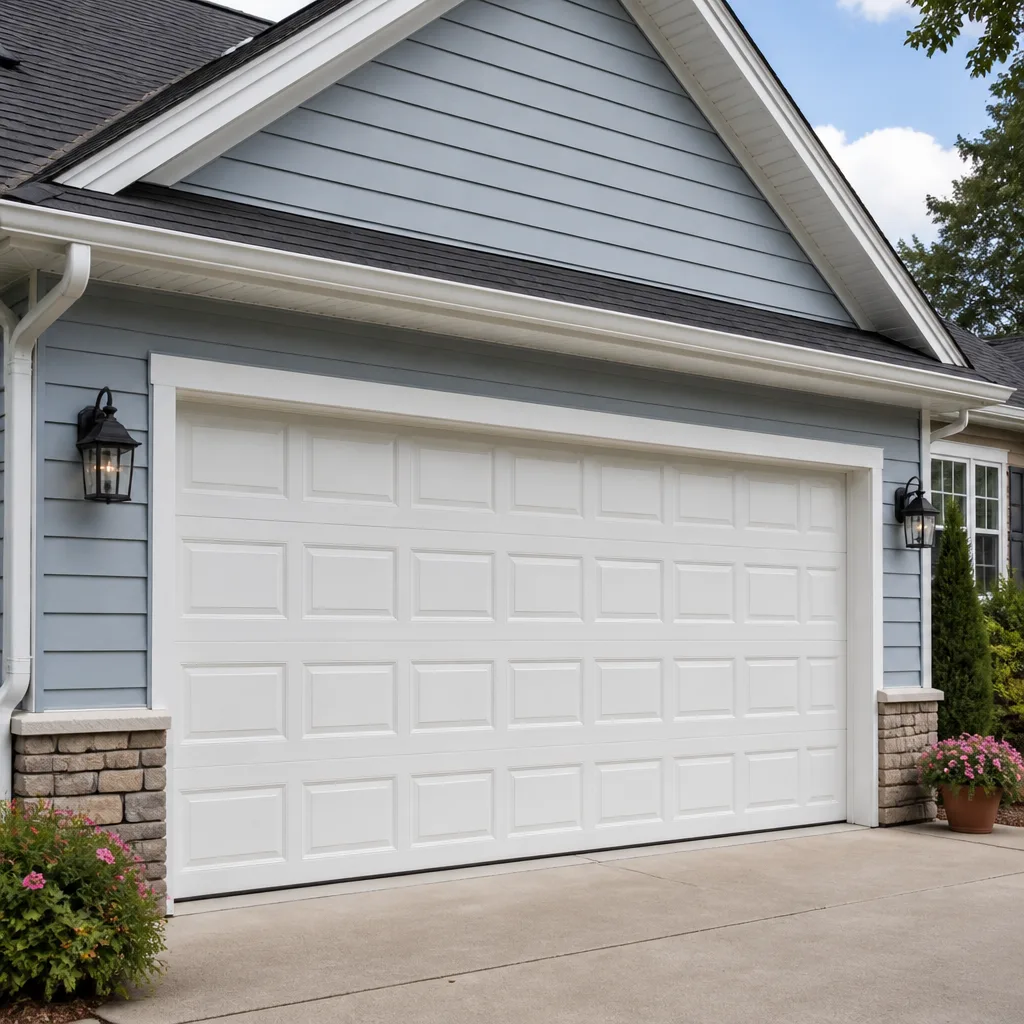 Raised-panel steel
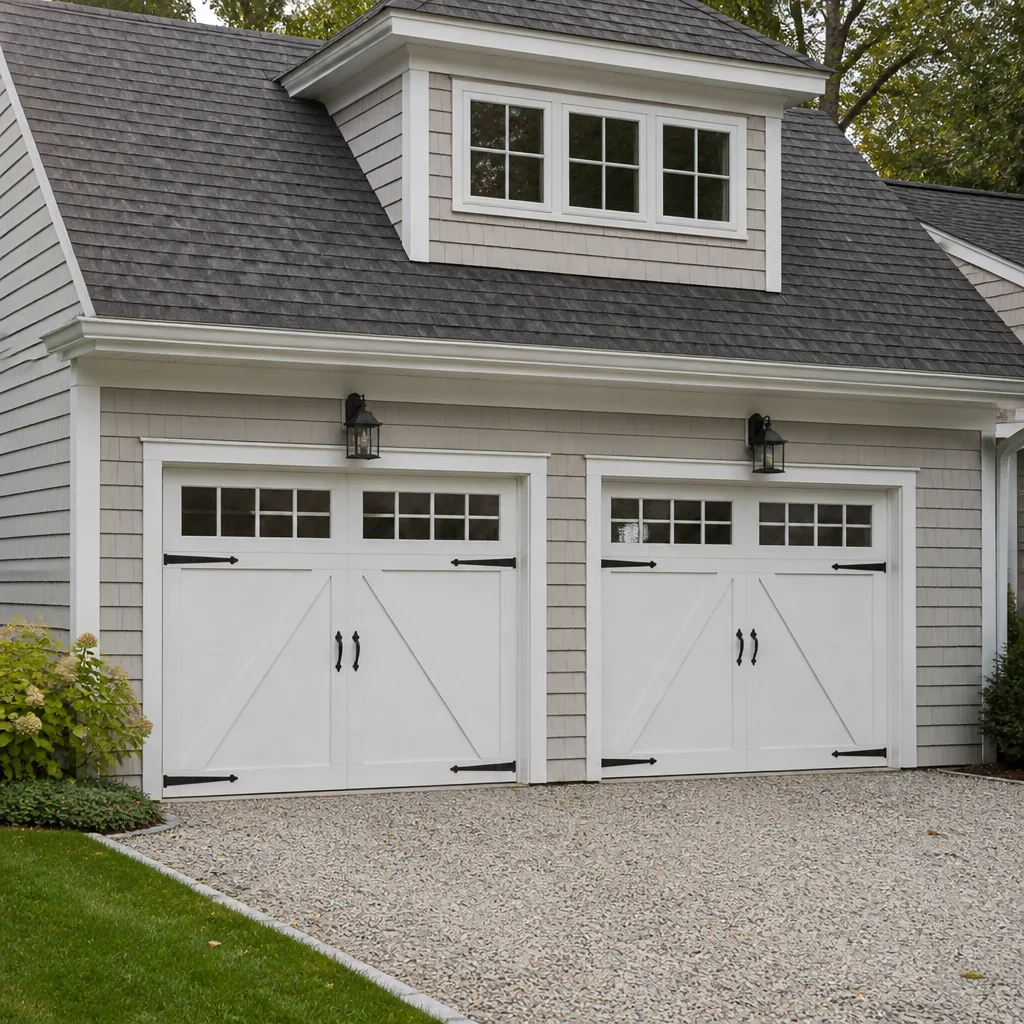 Carriage house
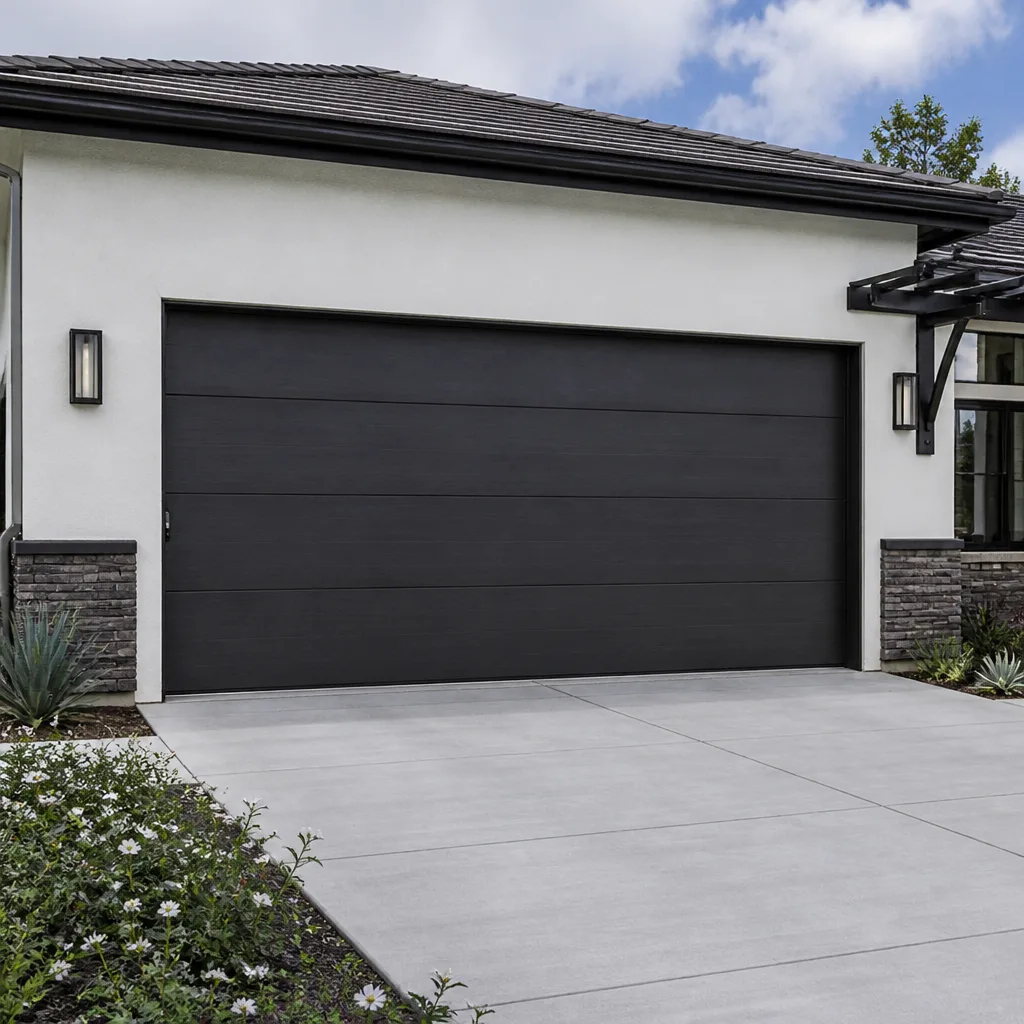 Modern flush
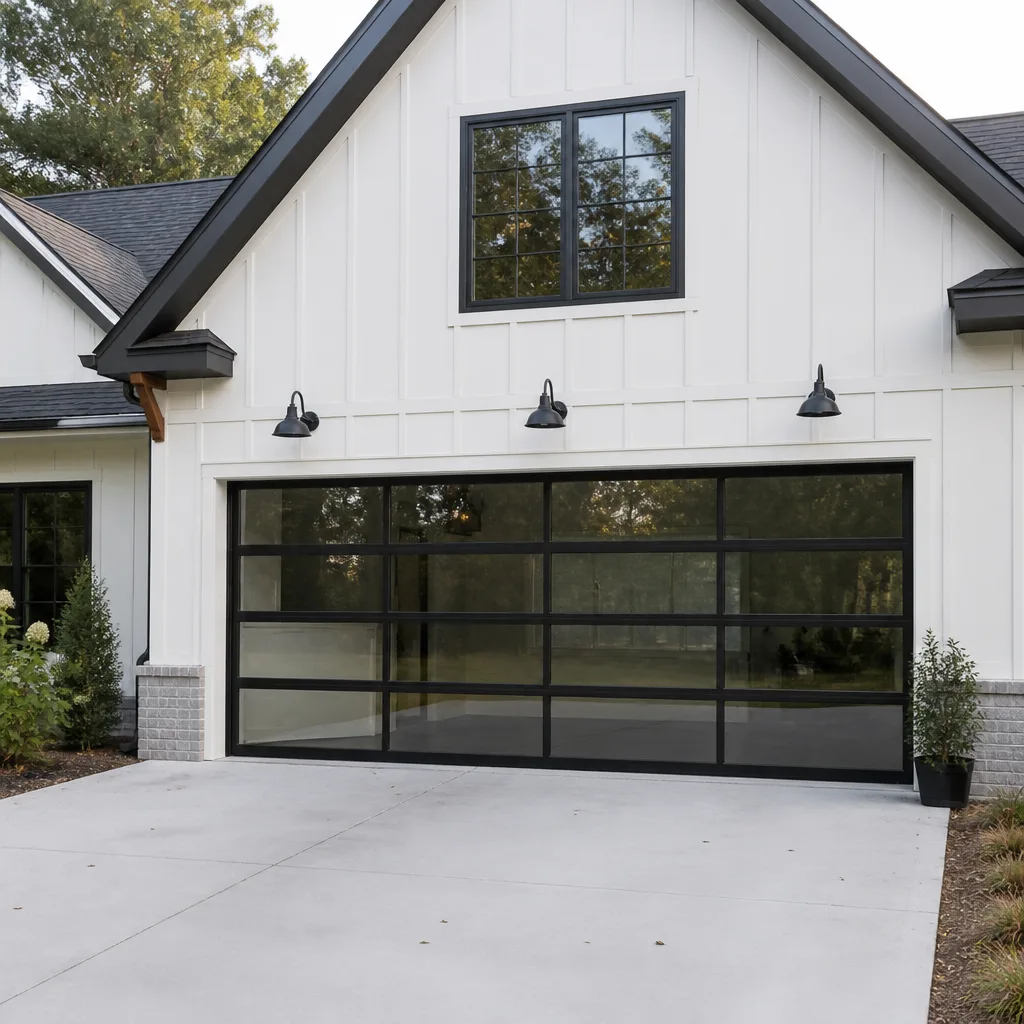 Full-view glass
 LiftMaster openers
 Chamberlain openers
Full 25-point door and opener safety check with every visit - springs, cables, rollers, tracks, and your LiftMaster or Chamberlain opener included
You get a price before we start. It does not change when the pro arrives.
Get your free estimateThe Complete Guide to Garage Doors in Mission Bend
Most garage door guides are written for a mythical average climate. Mission Bend isn’t average. The clay-heavy soil under these subdivisions swells and shrinks with the seasons, and that movement is one of the most common reasons we get called out to look at a door that suddenly won’t seal or a frame that looks out of square. National guides won’t tell you that. This guide will.
We’ll walk through how Mission Bend’s soil, humidity, and HOA-dense subdivisions shape every decision you make about a garage door: what material to buy, which opener holds up in a hot garage, when a panel swap makes sense versus a full replacement, and how to handle color restrictions before you order anything. If you’ve ever wondered why your neighbor’s door sags differently than yours, or why the same opener that lasted years somewhere else struggles here, this is the page for that answer.
Quick Answer
A garage door in Mission Bend usually needs repair when frame alignment shifts from clay soil movement, when hardware corrodes from humid air, or when an opener overheats in an uninsulated garage during a Texas summer. Most problems are fixable with a targeted repair rather than a full replacement. The choice between the two comes down to the cost of the repair relative to the cost of a new door, which is why a written estimate matters more than a phone quote.
Styles & brands we work with
- Raised-panel steel
- Carriage house
- Modern flush
- Full-view glass
- LiftMaster openers
- Chamberlain openers
Table of Contents
- Why Clay Soil Makes Door Frames Move in Mission Bend
- Galvanized Steel vs. Aluminum: What Survives Here
- HOA Colors, Styles, and Getting Specs Before You Buy
- Choosing an Opener for an Uninsulated Texas Garage
- Panel Swap or Full Replacement? The Cost Threshold
- Springs and Cables: The Safety-Critical Parts
- When the Door Won’t Move: What to Do First
- A Simple Maintenance Routine for This Climate
Why Clay Soil Makes Door Frames Move in Mission Bend
Fort Bend County sits on expansive clay soil. When it’s wet, the clay swells. When it dries out through a hot summer, it contracts. That movement doesn’t happen evenly across a lot, and a garage slab is only as stable as the ground under the corners. Over a season of wet and dry cycles, the openings the door rides in can shift just enough to matter.
What that looks like at the door: a gap along one side of the weather seal, a door that rubs against the frame at the top on one corner, or a panel that suddenly catches on the track it cleared last month. Homeowners often assume the door itself has warped. More often, the geometry around it has changed slightly and the door is doing exactly what it was built to do inside a frame that’s no longer plumb.
This is why we check plumb and track alignment before we sell anybody a new door. If the frame has moved, a new door installed into the same opening will develop the same symptoms. Fixing the alignment and re-sealing the perimeter is often the real repair.
Three things worth checking when a seal starts leaking at one edge:
- Whether the gap is consistent top to bottom or widens toward one corner (widening points to frame movement).
- Whether the bottom rubber has flattened or torn (that’s just a seal replacement).
- Whether the track is still parallel to the frame or has drifted with it.
If you’re seeing a persistent gap that comes back after sealing, that’s the moment to bring in someone who can measure the opening properly. Our garage door repair service starts with that measurement, not with a sales pitch.
Galvanized Steel vs. Aluminum: What Survives Here
Mission Bend sits inland, but the humidity here is real, and it works on metal slowly and steadily. Between the moisture in the air and the condensation that forms inside an uninsulated garage, you want a door material that tolerates damp conditions without giving you grief.
Galvanized steel is the practical choice for most Mission Bend homes. The zinc coating on galvanized steel is there specifically to resist rust, and it holds up far better than bare aluminum in humid conditions. Aluminum doesn’t rust, which sounds like an advantage, but it dents more easily under impact and can develop oxidation and pitting over time in humid air. It’s also generally lighter, which some homeowners prefer, but the trade-off is durability against the kind of knocks a residential door takes.
What we see in this market:
- Galvanized steel: the most common choice for good reason. It resists corrosion, takes paint well, and holds its shape.
- Aluminum: works for lighter doors and some modern styles, but dents more readily and needs more attention in humid conditions.
- Wood: beautiful, but high maintenance here. Humidity causes swelling and shrinking that stresses joints and paint.
Brands like Amarr and Wayne Dalton make steel doors that hold up well in this climate, and we work with both. The quality of the steel gauge and the finish matter more than the name on the box, though. A heavier gauge with a good factory finish will outlast a thinner door every time in this humidity.
One thing to check on any steel door: whether the bottom section has a rust-resistant treatment. The bottom panel takes the most moisture, and a door that skimps there will show it first.
HOA Colors, Styles, and Getting Specs Before You Buy
Mission Bend’s subdivisions are HOA-heavy, and most of them have opinions about what your garage door can look like. Color is the big one. Many HOAs restrict the palette to a handful of approved shades, and some restrict panel styles or window inserts too. Ordering a door before you’ve confirmed the specs is one of the most expensive mistakes we see.
Here’s the order of operations that saves you a return:
- Get your HOA’s architectural guidelines in writing. Ask for the specific document that covers exterior modifications, not a verbal summary from a neighbor.
- Confirm the approved color palette. If your HOA gives paint codes or brand-specific color names, write them down exactly.
- Check whether your subdivision requires an architectural request form. Many do, and approval can take time, so start early.
- Share those specs with whoever is ordering the door. The manufacturer needs the exact color and style, not an approximation.
The trap is that “white” means different things to different manufacturers. An HOA-approved white from one brand may not match the approved white from another. Get the spec in the form the HOA uses, and hand that to us so the order matches on the first pass.
Panel style matters too. Some Mission Bend HOAs restrict the number of windows or the panel configuration, and a raised-panel door in the wrong layout can trigger a compliance letter after installation. It’s easier to confirm before the order than to replace a door after the fact. If you’re not sure what your subdivision requires, that’s a conversation worth having before you commit to a design.
Choosing an Opener for an Uninsulated Texas Garage
Most garages in Mission Bend are uninsulated, which means the opener is working in summer heat that can push well past what you’d find in a conditioned space. That heat is hard on motors, and it’s a big part of why some openers fail early here. The drive type you choose matters for how well the unit handles it.
Belt-drive openers run quieter and generate less friction heat than chain-drive models, which makes them a reasonable fit for a hot garage and for homes where the garage shares a wall with a bedroom. Chain-drive openers are durable and less expensive, but they’re louder and the chain mechanism works harder in heat. Screw-drive sits somewhere in between and needs less maintenance than a chain, though it can be noisier than a belt over time.
For Mission Bend’s summers, we usually suggest a belt-drive opener with a DC motor. DC motors tend to run cooler and start more smoothly than AC motors, which is an advantage in an environment where the unit is already fighting ambient heat.
Brands we work on regularly include LiftMaster, Chamberlain, Genie, and Craftsman, all of which have belt-drive options that handle this climate well. If your existing opener is one of those and it’s failing, our garage door opener repair service can often fix the unit rather than replace it. Motors, logic boards, and safety sensors are all repairable parts.
One more heat-related note: if your opener has a battery backup, check that the battery hasn’t swelled from heat exposure. A swollen battery can prevent the unit from operating on mains power. It’s a small thing that causes a lot of confusion.
Panel Swap or Full Replacement? The Cost Threshold
This is the decision homeowners ask about most, and there’s a rough rule that holds up in most Mission Bend cases. If the damage is confined to one or two sections and the rest of the door is structurally sound, a panel swap is usually the better value. If the damage is widespread, the door is old, or the tracks and hardware are compromised, a full replacement tends to make more sense.
Here’s how the math usually breaks down. A panel swap addresses the damaged section without touching the working parts of the door. A full replacement resets everything: panels, tracks, springs, and hardware. The threshold where replacement wins is when the cost of repairing the damage plus the age of the remaining components adds up to more than half the cost of a new door.
What pushes a decision toward full replacement:
- The door is more than one or two panels damaged, especially if the damage crosses sections.
- The tracks are bent, rusted, or out of alignment beyond what adjustment can fix.
- Springs and cables are due for replacement at the same time as the panel work.
- The door style is discontinued, making a matching panel hard or impossible to source.
- The existing door is a lighter gauge than what this climate calls for.
A panel swap is the right call when the door is in otherwise good shape and you can still source a matching panel. If you’re not sure which side of the line you’re on, a written estimate from our garage door installation team will lay out both options side by side. The final price is set by that written estimate, and it’s quoted before any work starts.
Springs and Cables: The Safety-Critical Parts
Springs and cables are under extreme tension. A torsion spring on a standard residential door holds enough stored energy to cause serious injury if it releases unexpectedly, and that’s not a warning we say lightly. This is the one part of garage door work we tell every homeowner not to attempt themselves. There’s no safe way to learn it on your own door.
What you can do is recognize the signs that a spring is failing before it breaks. Watch for:
- A loud bang from the garage, often followed by a door that won’t lift.
- A visible gap in the torsion spring coil above the door.
- A door that feels unusually heavy when you try to lift it manually.
- The opener straining or the door stopping partway up.
When a spring breaks, the door becomes unsafe to operate. Don’t force it, and don’t keep hitting the opener button hoping it’ll catch. Call for help and leave the door in place.
Spring replacement is part of what we do, and it’s a job we handle directly rather than referring out. Springs are priced per spring, and because a matched pair usually wears out together, a pair replacement costs roughly twice a single spring. Our garage door spring repair service covers both, and the technician will tell you whether one or both need replacing before anything is touched. That conversation happens before the work, not after.
Cables are part of the same system and carry the same risk. If you see a frayed or slack cable, treat it the same way: stop using the door and get it looked at.
When the Door Won’t Move: What to Do First
A door that won’t open in the morning before work or won’t close at the end of the day is a specific kind of frustration. The first thing to do is stop pressing the button. Repeated attempts on a door with a broken spring or a jammed track can turn a repair into a bigger repair. Release the opener if you can do so safely, and leave the door where it is.
What to check before you call:
- The wall switch. Make sure the opener is receiving power and the switch isn’t the problem.
- The safety sensors. Look for anything blocking the beam at the bottom of the door, including cobwebs or a misaligned sensor bracket.
- The manual release. If you can safely pull the release cord, the door should disengage from the opener. If the door still won’t move by hand, the problem is in the door, not the opener.
If none of that solves it, you need a technician. Mission Bend Garage Door Repair Pros offers emergency garage door service as a named part of what we do, not an afterthought. We answer 24/7. Fast dispatch from 7am to 7pm, Sunday through Friday, and we’re closed Saturday. A Saturday call is booked into the next opening, Sunday, and we’ll get you on the schedule. Same-day service is often possible for repair calls.
While you wait, keep the door in the closed position if it’s safe to do so. An open garage door leaves your home exposed, and a door stuck halfway is a hazard to anyone walking through.
A Simple Maintenance Routine for This Climate
Most garage door problems in Mission Bend are preventable with a modest routine. You don’t need to take anything apart. You need to look at the right things a few times a year and lubricate the parts that need it.
A sensible seasonal check:
- Lubricate the springs, hinges, and rollers with a garage-door-specific lubricant. Not WD-40, which attracts dust.
- Check the weather seal along the bottom and sides for gaps or cracking. Replace the seal if it’s flattened.
- Look at the tracks for bends or debris. Wipe them down; don’t grease them.
- Test the safety reverse by placing a small object in the door’s path and confirming the door reverses on contact.
- Balance the door by disengaging the opener and lifting it halfway. A balanced door should stay put. If it drifts down, springs may need adjustment.
Do the balance test carefully. If the door falls, let it. Don’t try to catch it.
Given the clay soil movement here, it’s also worth checking the frame alignment once a year, especially if you notice a seal gap coming back. Small adjustments early are cheaper than a track replacement later. Our team can do a full inspection alongside any repair visit if you want a second set of eyes on the whole system.
Common Mistakes to Avoid
- Ordering a door before confirming HOA specs. Mission Bend’s HOA-dense subdivisions often restrict color and panel style, and a non-compliant door is an expensive correction.
- Assuming a seal gap means a warped door. In this soil, it usually means the frame has moved. A new door into the same opening will develop the same problem.
- Trying to replace springs yourself. Springs are under extreme tension and can cause serious injury. This is the one job to always leave to a trained technician.
- Greasing the tracks. Tracks should stay clean and dry. Grease attracts dust and grit that wears out rollers faster.
- Choosing aluminum for a high-impact location. Aluminum dents more easily than galvanized steel, and in this humidity it can pit over time.
- Ignoring a noisy opener in summer. Heat makes an aging opener work harder. A noise that appears in July often points to a motor or bearing problem worth checking.
- Forcing a door that won’t move. Repeated attempts on a jammed or broken door can bend tracks and turn a small repair into a larger one.
See the difference
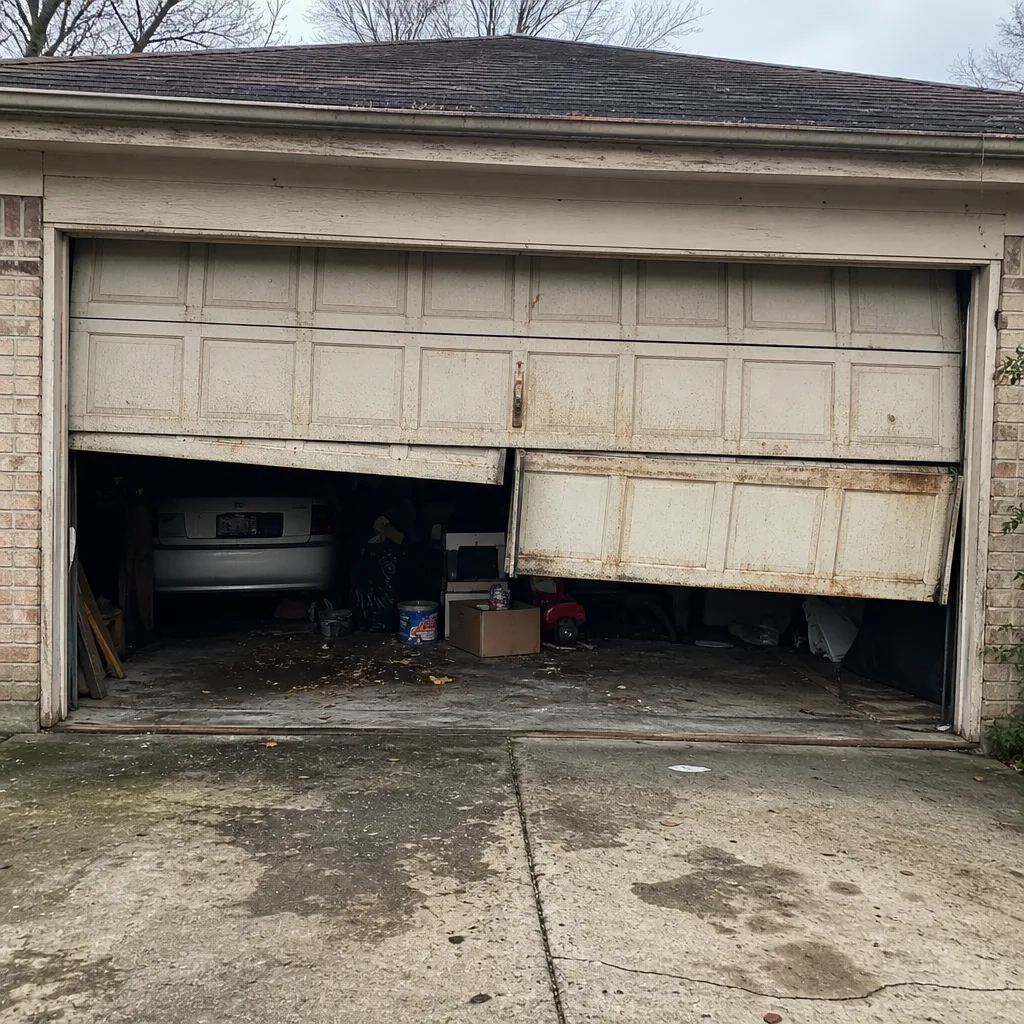 Before
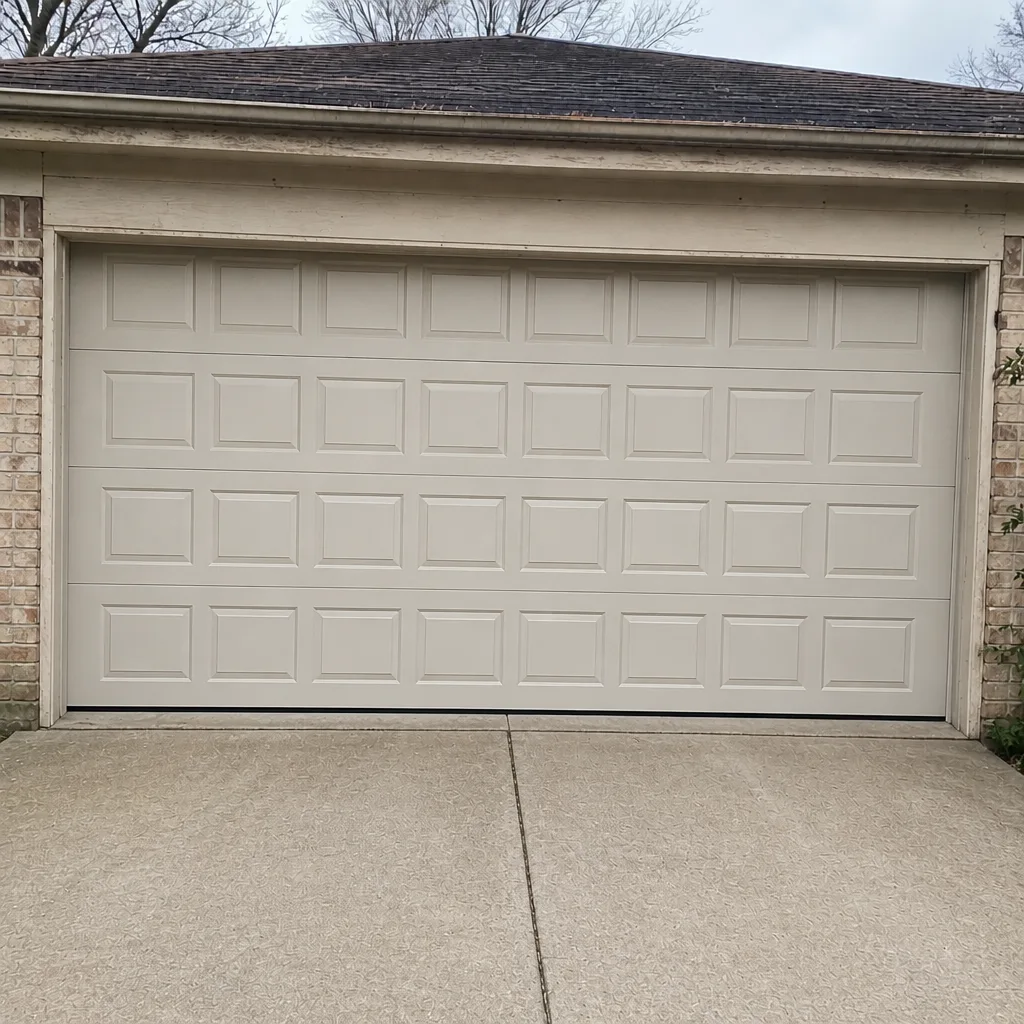 After
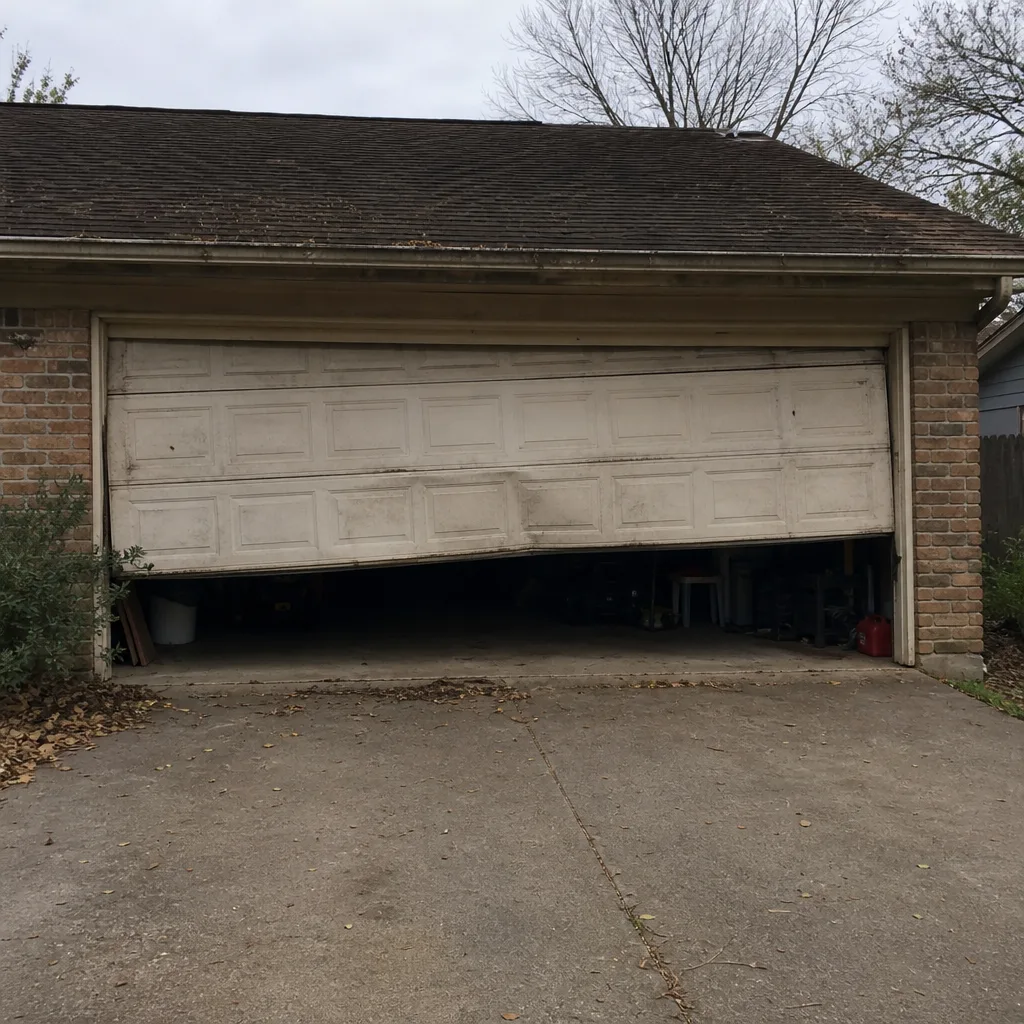 Before
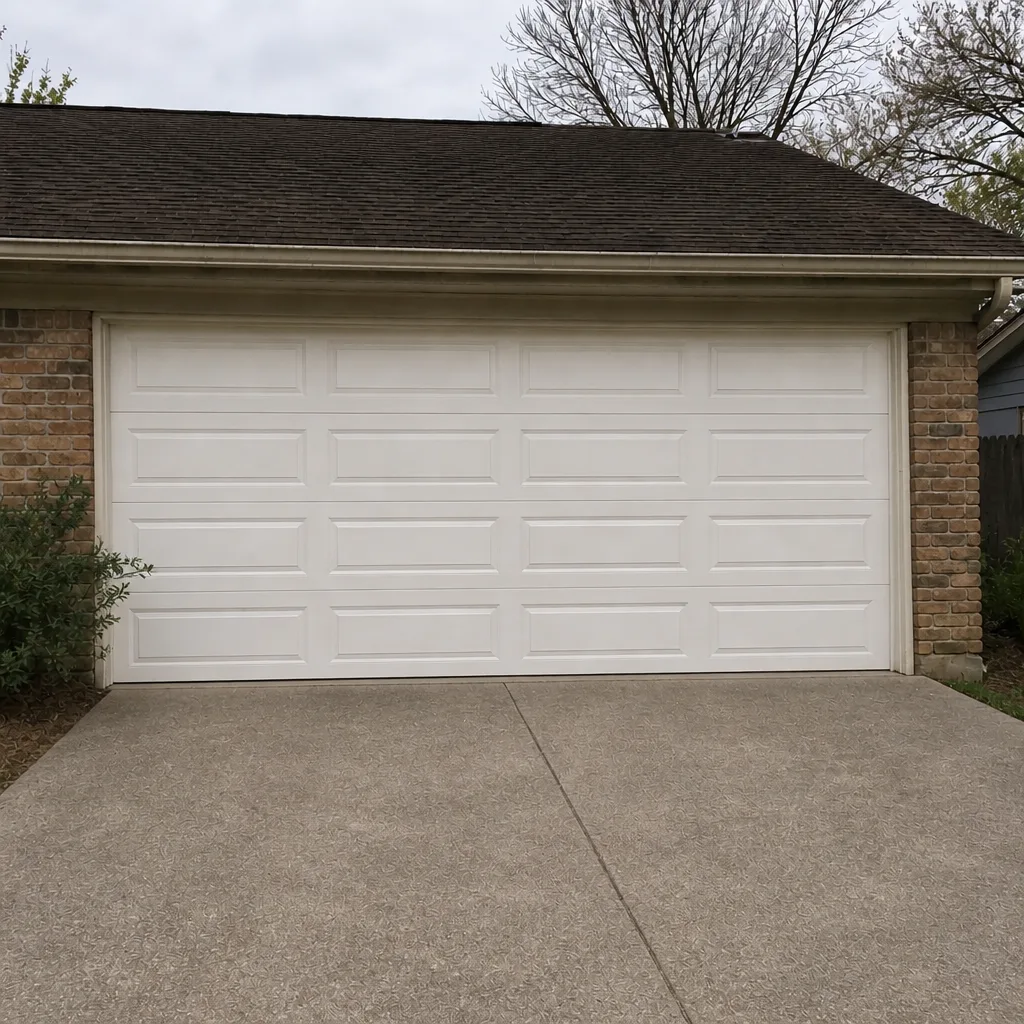 After
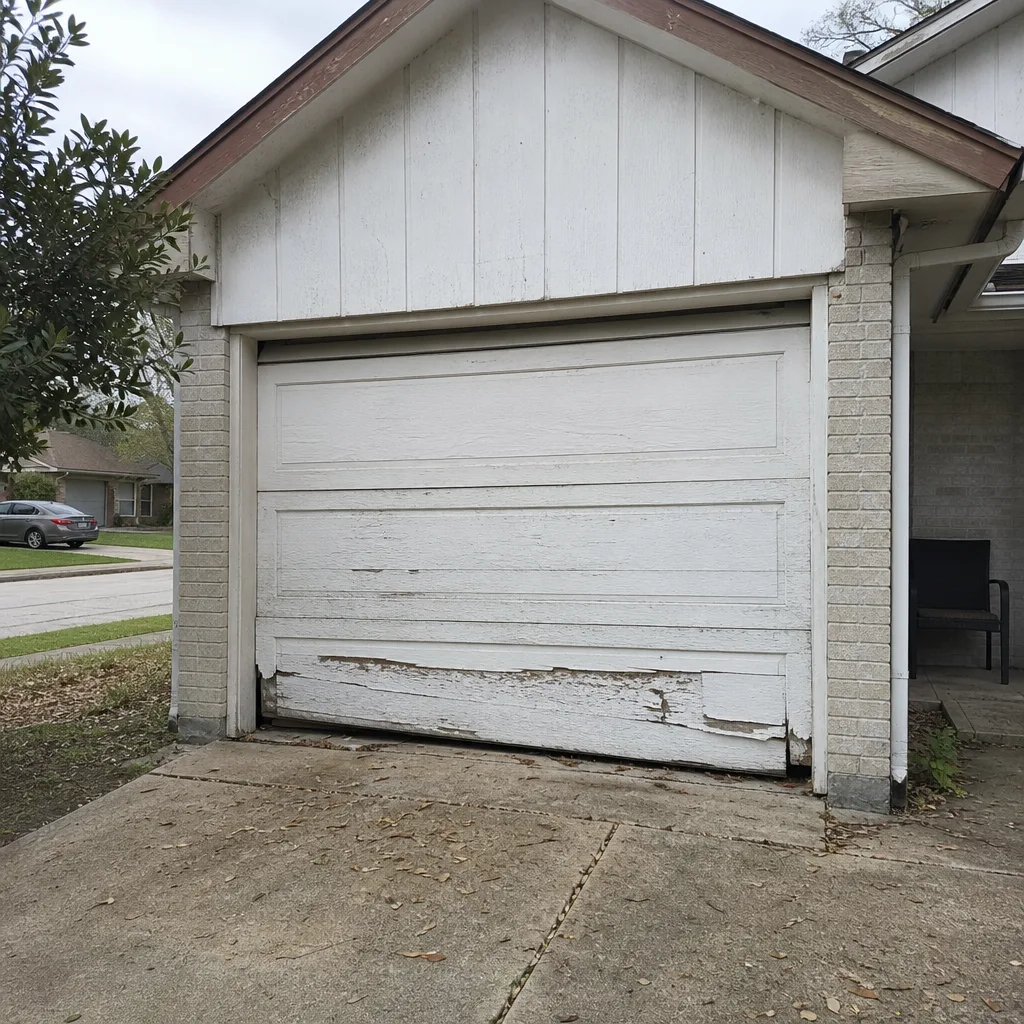 Before
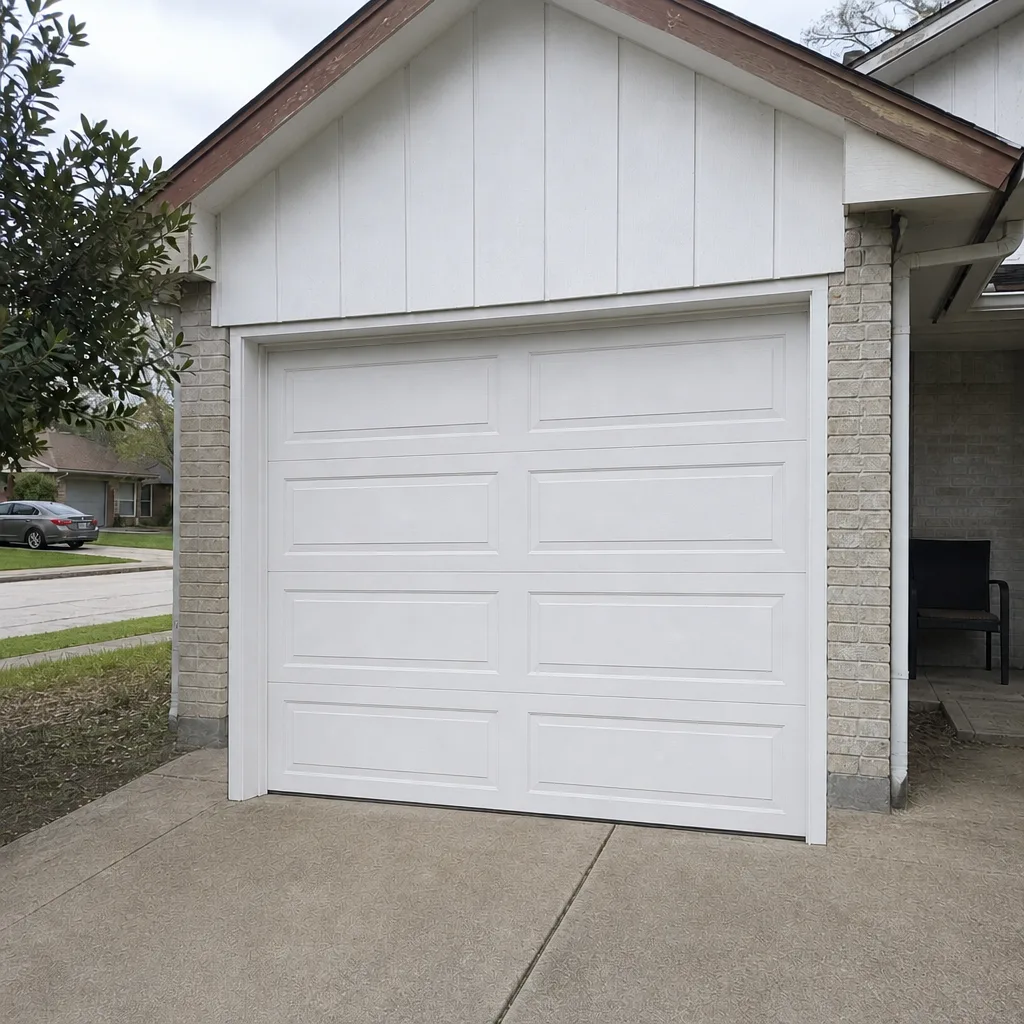 After
When to Call a Professional
Some garage door problems are safe to troubleshoot yourself: a blocked sensor, a dead remote battery, a wall switch that isn’t working. Others need a trained technician, and knowing the difference matters. Call a professional when a spring has broken, when a cable is frayed or slack, when the door is off its track, when the opener strains or stops partway, or when you’ve tried the basics and the door still won’t operate. Also call when you’re planning a replacement and need a written estimate that accounts for the local soil and humidity conditions. Mission Bend Garage Door Repair Pros offers free estimates in Mission Bend. Call (855) 658-5076, and we’ll get a technician out to look at it. The price is quoted and agreed before any work starts.
Frequently Asked Questions
Spring repair in Mission Bend is priced per spring, and because springs usually wear as a pair, a matched pair replacement typically costs about twice a single spring. The exact price depends on the spring type and door weight, and the written estimate sets the final number before any work begins. Call (855) 658-5076 for an exact quote. Estimates are free.
A seal that keeps coming loose usually points to frame movement from the clay soil, not a bad seal. Fort Bend County’s expansive clay shifts with wet and dry cycles, which can pull the frame slightly out of plumb and open a gap along one edge. The fix is usually frame alignment and re-sealing rather than a new seal alone. Call (855) 658-5076 to have it measured properly.
Same-day service is often possible for repair calls in Mission Bend. We answer 24/7, with fast dispatch from 7am to 7pm, Sunday through Friday. We’re closed Saturday, and a Saturday call is booked into the next opening on Sunday. Call (855) 658-5076 to find the next available slot. Estimates are free.
Yes. The local professionals we connect you with are licensed and insured as their state requires, and our technicians have up to 10 years of experience. All work is garage doors only, so you’re not dealing with a generalist who handles five trades. Call (855) 658-5076 with any questions before booking. Estimates are free.
No. The written estimate sets the price, and it’s agreed before any work starts. If the technician finds something unexpected during the job, you’ll be told before anything extra is done, and nothing proceeds without your approval. Call (855) 658-5076 for a written quote. Estimates are free.
Permit requirements vary by jurisdiction, so ask the City of Mission Bend or your county building department before scheduling a replacement. Some areas require a permit for structural changes and others don’t require one for a straight door swap. It’s a quick call that saves headaches later. Call (855) 658-5076 if you’d like to talk through the scope of your project first. Estimates are free.
The Bottom Line
Garage doors in Mission Bend fail differently than they do in most of the country. Clay soil moves frames out of alignment, humidity works on metal and hardware, HOA rules shape what you can buy, and summer heat stresses every opener in an uninsulated garage. Knowing those local patterns changes the decisions you make, from material to drive type to whether a panel swap or a full replacement is the smarter spend. Springs and cables are the one area to always hand to a trained technician, and the rest is mostly about checking the right things at the right time. If you want a straight diagnosis and a clear written price before any work starts, our team is here for the whole arc, from a door that won’t move today to a replacement you’re planning for next season. Call (855) 658-5076, and we’ll take a look. We answer 24/7, with fast dispatch from 7am to 7pm, Sunday through Friday.
Explore our Mission Bend Garage Door Repair Pros services if you’d like to see everything we handle in one place.
Written by the team at Mission Bend Garage Door Repair Pros.