
Last updated November 22, 2026
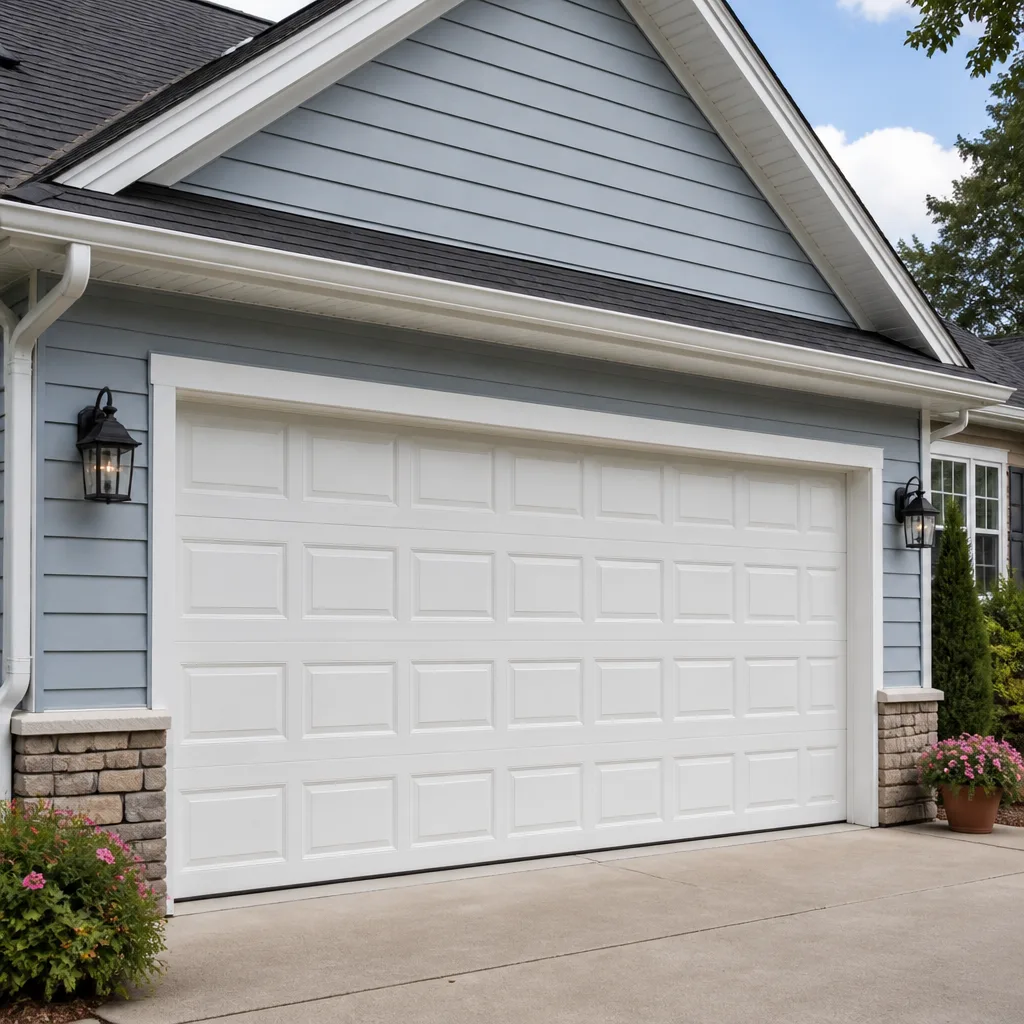 Raised-panel steel
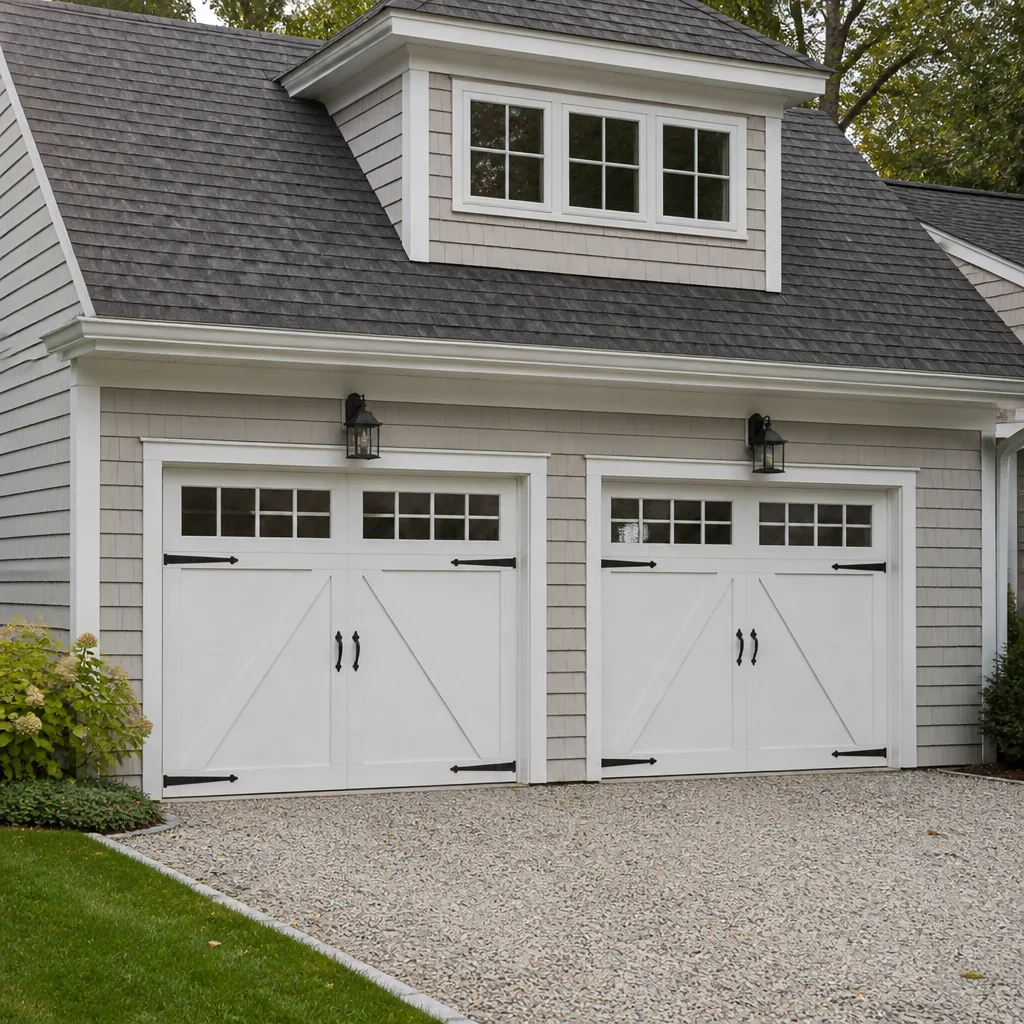 Carriage house
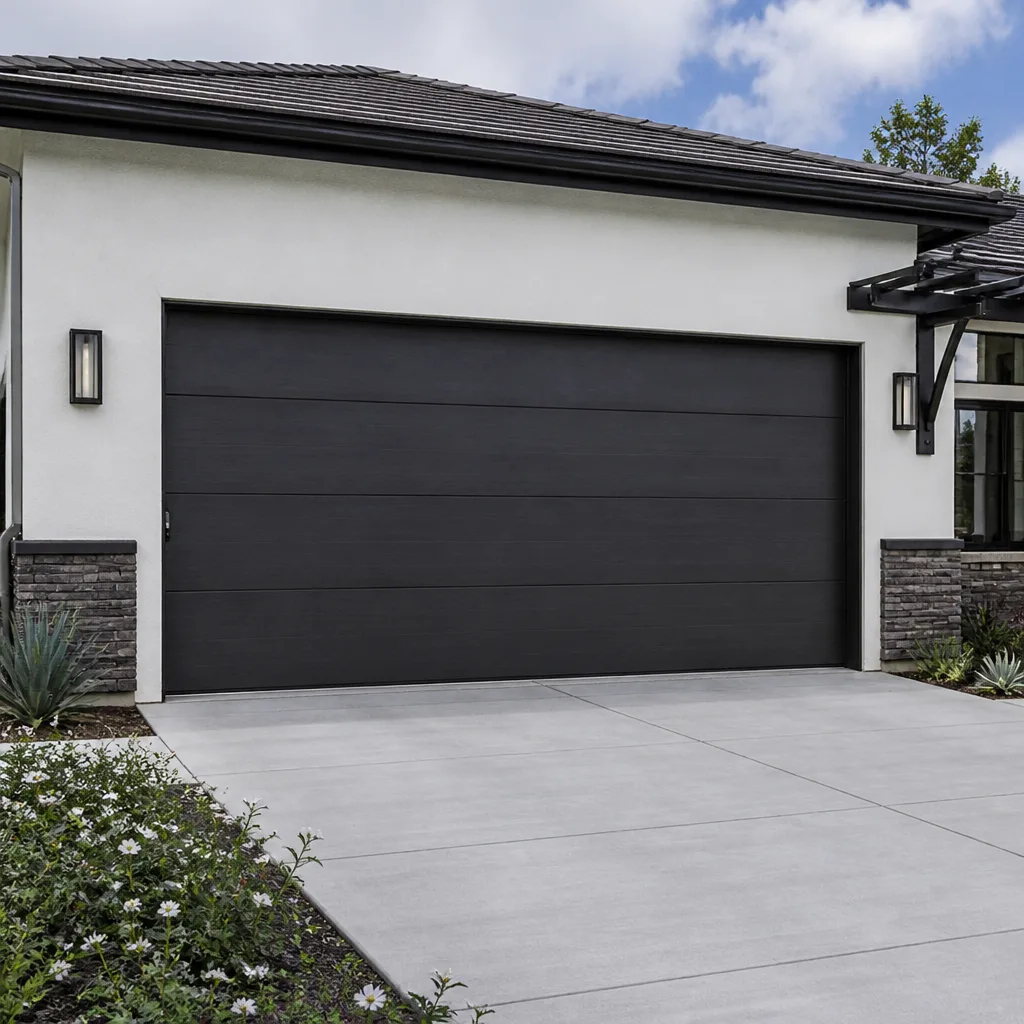 Modern flush
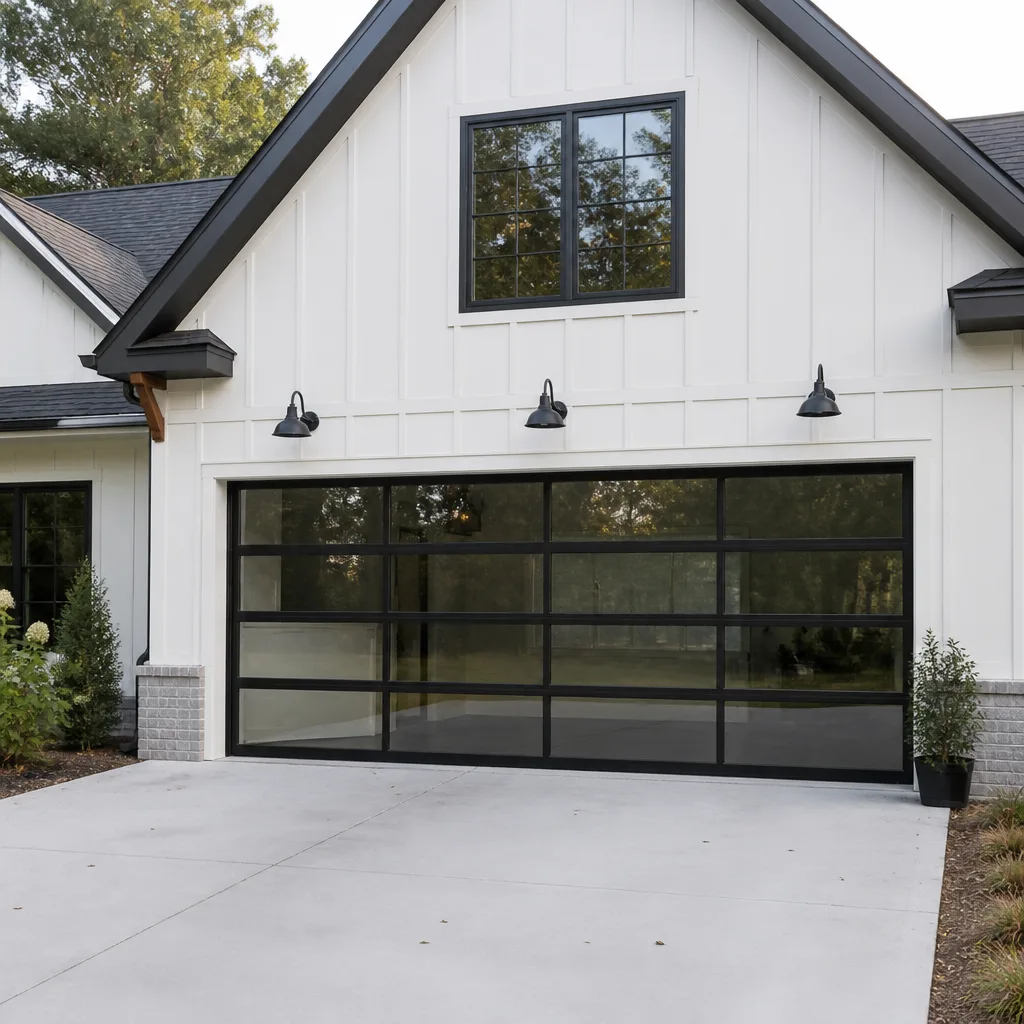 Full-view glass
 LiftMaster openers
 Chamberlain openers
Full 25-point door and opener safety check with every visit - springs, cables, rollers, tracks, and your LiftMaster or Chamberlain opener included
You get a price before we start. It does not change when the pro arrives.
Get your free estimateDIY vs Professional Garage Door: The Mission Bend Homeowner’s Decision Guide
Most garage door advice treats the whole door as one category: “don’t touch it, call a pro.” That’s lazy, and it’s wrong. Replacing a bottom weatherstrip seal is a genuine twenty-minute homeowner job with a ten-dollar part. Replacing a torsion spring is a different animal entirely: it stores enough mechanical energy to cause fatal injuries, and that’s not a liability disclaimer, it’s physics. The smarter question isn’t whether you’re handy enough for garage door work. It’s which specific tasks carry injury or warranty consequences severe enough that professional work becomes the lower-risk financial choice. This guide draws that line task by task, with the local details that matter in Mission Bend.
Quick Answer
The safe DIY/professional line on a garage door runs between low-tension, cosmetic and electronic tasks and anything that stores mechanical energy. Weatherstripping, lubricating moving parts, cleaning photo-eye sensors, and testing the manual release are reasonable homeowner jobs. Torsion springs, extension springs, cables, bottom brackets, and structural hardware should go to a trained technician, because those parts are under extreme tension and a mistake can injure you or void your door’s warranty. In Mission Bend, where summers push past 100°F, any adjustment involving cables or springs is also far harder to do safely in an unconditioned garage.
Styles & brands we work with
- Raised-panel steel
- Carriage house
- Modern flush
- Full-view glass
- LiftMaster openers
- Chamberlain openers
Table of Contents
- Where the DIY Line Actually Falls
- The Task-by-Task Decision Matrix
- Warranties, and Why Improper Installation Costs Real Money
- The Tools Real Spring Work Requires
- Why Mission Bend Heat Changes the DIY Calculation
- The One DIY Task Almost Everyone Skips
- When a Job Stops Being a Job and Starts Being a Safety Question
- Common Mistakes to Avoid
Where the DIY Line Actually Falls
A garage door is four systems stacked on top of each other, and each one has a different risk profile. Panels and trim are essentially carpentry. Weatherstripping is finish work. Openers are low-voltage electronics with a few mechanical adjustments. Springs, cables, and the hardware that anchors them are stored-energy systems, and they’re the reason garage door work has a reputation for danger.
That’s how we think about it when a homeowner in Mission Bend asks whether a repair is worth attempting. The trade we work in has a clear dividing line, and it isn’t about how mechanical you are. It’s about whether the part you’re touching can release enough force to hurt you, or whether getting it slightly wrong puts stress on the rest of the system.
A few examples help. Swapping out a bottom seal is forgiving: if you get it a little crooked, the door still operates, and you can redo it. A torsion spring is the opposite. It’s under hundreds of pounds of rotational tension at rest, and the two winding bars that hold that tension are the only thing between a stable door and a violent release. There’s no “close enough” outcome with a spring. It either goes back safely or it doesn’t.
The same logic applies to cables, which run through bottom brackets attached to a plate under tension. If a cable slips or a bracket gives way while you’re working near it, the result can be serious injury. That’s why professional spring and cable work exists as a separate skill, and why a specialist outfit keeps the right tools and training on hand for exactly this one trade. Shops like ours that do garage doors only – springs, openers, panels, full doors – never hand the job off to a handyman who mostly hangs drywall.
So the honest framing for a Mission Bend homeowner is this: stay DIY for the cosmetic, gasket, sensor and lubrication work, and hand the energy-storing parts to someone trained to manage them. Everything that follows is the detailed version of that rule.
The Task-by-Task Decision Matrix
This is the core of the guide. Treat each item on its own; the door is not a single verdict. Below is how we’d classify the most common garage door jobs a homeowner considers.
Reasonable DIY tasks
- Replacing the bottom weatherstrip seal. A worn seal lets in water, dust and small pests, and it’s one of the least risky parts to replace. Unhook the door from the opener, raise it, swap the seal, lower it, and the job is done in about twenty minutes. No tension, no springs.
- Cleaning and realigning photo-eye sensors. If the door reverses for no obvious reason, the sensors at the base of the track are usually dirty or knocked out of line. A soft cloth and a visual check that the two eyes face each other solves a lot of these.
- Lubricating hinges, rollers and tracks. A dry garage door in a hot climate gets noisy and stiff. A light application of garage-door-rated lubricant on the moving metal parts (not the tracks themselves, where it attracts grit) makes a real difference.
- Replacing opener remote batteries and re-pairing a remote. Follow the manufacturer’s pairing steps for your Genie, Chamberlain or LiftMaster unit. Purely electronic, no physical danger.
- Testing the manual release and the auto-reverse. This is the single most valuable thing a homeowner can do, and it’s covered in its own section below.
- Wiping down and painting panels. Cosmetic only. No mechanical risk if the door is down and disconnected.
Tasks to hand to a professional
- Torsion spring replacement or adjustment. The highest-risk job in the trade. Do not attempt it without proper winding bars and training.
- Extension spring replacement. Lower stored energy than torsion, but still under serious tension, and a failed extension spring can be dangerous. Same rule applies.
- Cable replacement, re-tensioning or any work near the bottom brackets. Cables and brackets carry the door’s weight and can release violently.
- Track realignment that involves more than the smallest adjustment. A badly bent or misaligned track can drop a door.
- Replacing hinges, rollers or a center bearing plate under load. These support the door’s weight while the door is up.
- Opener motor or rail replacement and major opener repairs. The opener pulls a heavy door and a mis-mounted rail is a mechanical risk. This is where calling for garage door opener repair is usually faster and safer than trying to fix a stripped gear or a damaged rail yourself.
- Full door replacement. Panel weight, springs, tracks and opener recalibration all interact. Getting a garage door installation right the first time is well worth it.
One rule of thumb we give every homeowner: if a part has the word “spring,” “cable,” “bracket” or “tension” attached to it, leave it alone. Everything else is worth reading up on and deciding.
Warranties, and Why Improper Installation Costs Real Money
The financial risk of DIY garage door work is often bigger than the injury risk, and homeowners rarely think about it. Almost every residential door and opener comes with a manufacturer’s warranty, and those documents almost always place the burden on proper installation and correct adjustment. If you replace a spring yourself, reinstall a track by hand, or swap an opener and wire it in a way that isn’t per the manufacturer’s instructions, you can void the warranty on the part, or on the whole system.
That matters more than it seems. If you replace a spring on your own and something fails six months later, the manufacturer may reasonably say the part wasn’t installed to spec. The repair you thought you saved on can wipe out coverage on a component worth several hundred dollars. Multiply that across springs, tracks, opener and door panels, and the warranty exposure from a few DIY mishaps can add up.
So before attempting any repair that involves the door’s mechanical systems, we recommend reading the warranty terms. The information is in the paperwork that came with the door or opener, or on the manufacturer’s site. Look specifically at the installation and maintenance clauses, and at what voids coverage. For brands like Clopay, Amarr or Wayne Dalton, the warranty language is usually explicit about professional installation and adjustment.
If you don’t want to read warranty fine print, there’s a simpler test. Ask yourself: if this part fails in a year, whose fault will the manufacturer say it is? If the answer is likely to be “the person who installed it,” you’re handing the warranty responsibility to a professional. That’s part of what you’re paying for when you hire a garage door specialist, and it’s real money.
The Tools Real Spring Work Requires
Even if you ignore the injury risk, the tools are a separate argument. Genuine torsion spring work requires: two winding bars sized for your spring cone, a set of spring winding rods, an adjustable wrench set, a ladder stable enough to work safely, and a working knowledge of how to hold tension on the door while you wind. You may also need safety glasses and heavy gloves.
Winding bars and proper rods are specialty tools. They’re not in every homeowner’s kit, and they’re not cheap to buy for a one-time job. Beyond the tool cost, there’s the risk of buying the wrong size bar for your spring, which can be more dangerous than not having one at all. A bar that doesn’t fully engage the cone can slip and send a spring loose.
The math usually favors the professional. A single spring job you’re going to do once, on a tool set that then collects dust, is rarely a financial win. Professional spring work comes with the right tools, the training, and the insurance to handle the risk if something goes wrong. We keep spring work in-house for exactly this reason; the highest-tension job in the trade isn’t something we pass to a general handyman. If your spring has already broken, garage door spring repair is a same-day job in most cases, and the written estimate you get before we start is the price you pay.
One pricing note we always give: spring prices are usually quoted per spring, and most doors run a matched pair that’s replaced together. So the pair usually costs about double a single spring. Ask specifically how many springs are being replaced, so you’re comparing like for like.
Why Mission Bend Heat Changes the DIY Calculation
Here’s a local factor the national DIY advice never mentions: Mission Bend summers. A garage here regularly passes 100°F in the warmer months, and that heat changes the difficulty of certain jobs in ways homeowners don’t anticipate.
Adjusting cable tension or working on springs in a garage that’s effectively an oven is not the same as doing it in a climate-controlled workshop. Heat saps concentration, makes hands sweat and grip slip, and turns what should be a careful, patient job into something you want to rush. The danger of a rushed spring job is one of the worst-case garage door scenarios. Heat also affects metal and lubricant behavior, so a door that was working fine can drag or squeal on a hot afternoon in a way that tempts a homeowner into an adjustment they shouldn’t attempt.
Another Mission Bend specific: a hot, dry garage tends to dry out rubber parts, so bottom seals and rollers crack and stiffen faster than in milder climates. That means seal replacement comes up more often here. The good news is that it’s the easiest, safest garage door job there is, and it’s worth doing on your own schedule. The less good news is that stiff, neglected hardware is exactly the kind of thing that turns into a bigger repair when ignored, which is why a little preventive lubrication goes a long way.
So climate matters in two directions. The heat makes the risky jobs more dangerous, and it makes the safe jobs more frequent. That’s the local equation for a Mission Bend homeowner deciding what to DIY.
The One DIY Task Almost Everyone Skips
If a homeowner does only one thing from this guide, it should be a monthly manual release test and a monthly auto-reverse test. In our experience, this is the task almost everyone skips, and it’s the one that would prevent a huge share of emergency service calls before they ever happen. It takes about five minutes and no tools.
Here’s the test, in order:
- Close the door fully and disconnect the opener. Pull the manual release cord (usually a red handle hanging from the opener rail) to unhook the door from the opener.
- Lift the door by hand about halfway. It should lift smoothly with reasonable effort, and it should hold itself in place when you let go. If it drops, slams down, or feels much heavier than it should, something in the spring or balance system is wrong. Stop and call a professional; don’t operate the door until it’s looked at.
- Lower the door gently and reconnect the opener. Pull the cord straight back until it clicks into the carriage.
- Test the auto-reverse. Place a small object, like a folded piece of paper or a roll of tape, in the door’s path, then close the door with the opener. The door should reverse on contact, or the photo-eye sensors should stop it before it touches. If it doesn’t reverse, the safety system has failed and the door shouldn’t be operated.
- Test the photo-eye sensors manually. With the door open, pass your hand through the sensor beam at the base of the track. The opener’s light should flicker or the door should stay put. If nothing happens, the sensors are misaligned or the opener’s safety circuit has a problem.
If any of those tests reveals a problem, that’s a signal to get the system looked at. A door that fails a balance test or an auto-reverse test is a door with a real safety issue, and Mission Bend heat can cause the symptom (a door that drags or a sensor that misaligns) without there being anything you did wrong. The monthly test catches these problems before they become an emergency.
When a Job Stops Being a Job and Starts Being a Safety Question
There’s a clean way to know when to stop and call a professional. It isn’t about whether you can technically do the repair. It’s about whether the failure mode of getting it wrong is injury, structural damage, or a door that drops.
That means calling a professional when:
- You’re dealing with springs in any form, torsion or extension.
- A cable looks loose, frayed, or has slipped off a drum.
- The door is unbalanced: it slams down, needs to be propped up, or lifts with noticeable resistance.
- A track is visibly bent, or the door is off its tracks.
- An opener has a mechanical problem (a stripped gear, damaged rail or a motor that runs without moving the door).
- You’re replacing a door or a major component, and you want the warranty to actually cover it.
The flip side: if the door operates normally, you’re replacing a seal or a sensor, or you’re checking balance and auto-reverse, that’s yours to handle. Use the test in the previous section to know where you stand. If the door balances and reverses correctly, you’re likely in DIY territory for the cosmetic work.
This is also where a single-trade specialist makes a difference. A general handyman who mostly does drywall may not want to touch a tensioned spring either. A garage door specialist, working on doors and openers all day, has the right tools and knows the failure modes across different brands: LiftMaster, Chamberlain, Genie, Clopay, Amarr, Wayne Dalton, Craftsman and Raynor. That broad familiarity means you’re not gambling that the person on your door has seen the specific system before.
How Mission Bend Homeowners Usually Sequence the Decision
Most of the homeowners we talk with in Mission Bend don’t work through the decision in one sitting. There’s a usual progression, and it’s useful to see it laid out.
- First, a nuisance symptom appears. The door squeals, the opener reverses for no reason, or a seal starts letting in water. These are usually DIY-range problems: lubricate, clean and realign the sensors, replace the seal.
- Next, a symptom that’s ambiguous. The door feels heavier than it used to, or it doesn’t hold itself open when connected to the opener. This is where people overreach. A balance problem points back to the spring or cable system, and that’s a professional repair, not a DIY adjustment.
- Then a genuine failure. A spring snaps, a cable lets go, or the door won’t move. This is where a same-day call matters, and where a garage door specialist who handles springs in-house has a real advantage.
- Finally, a replacement decision. When the door itself is aging, replacing panels, opener or the whole door is a scheduled job, not an emergency. It’s the point where a specialist can handle both the repair today and the replacement when you’re ready.
The pattern to notice is that the range of things a homeowner should handle is narrow and early; the jobs where a professional earns their fee come later, and they’re the ones a homeowner should never push through alone. Mission Bend’s dry heat accelerates the early-range work (seals, lubrication), which is why our local customers tend to notice wear sooner than homeowners in milder climates.
See the difference
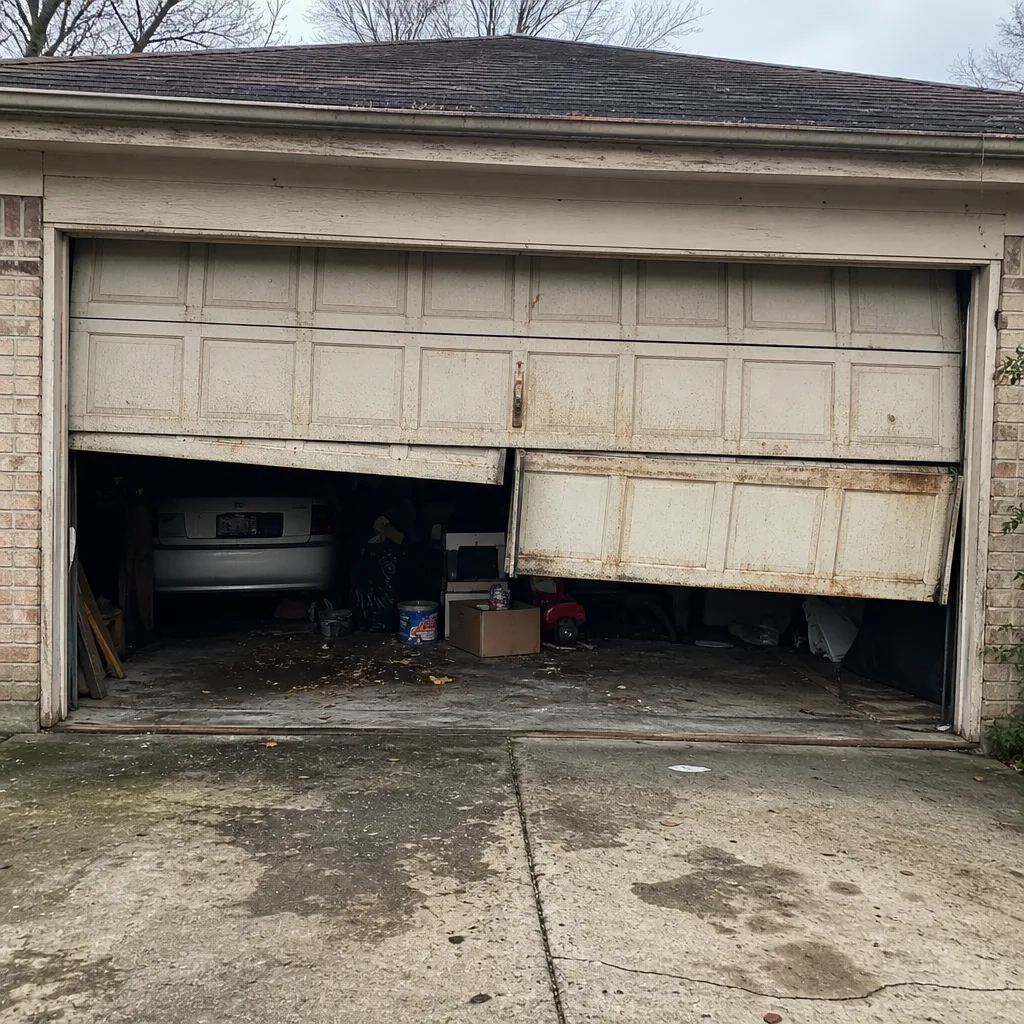 Before
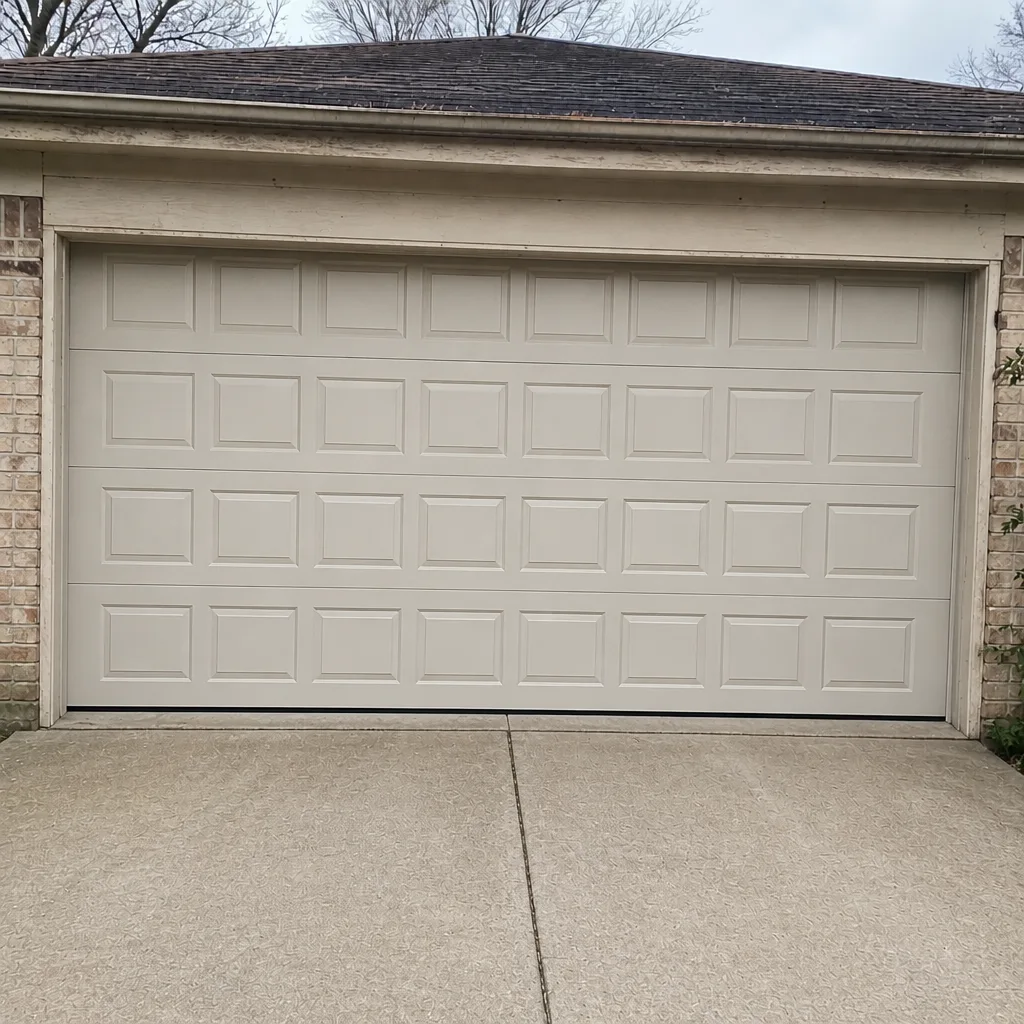 After
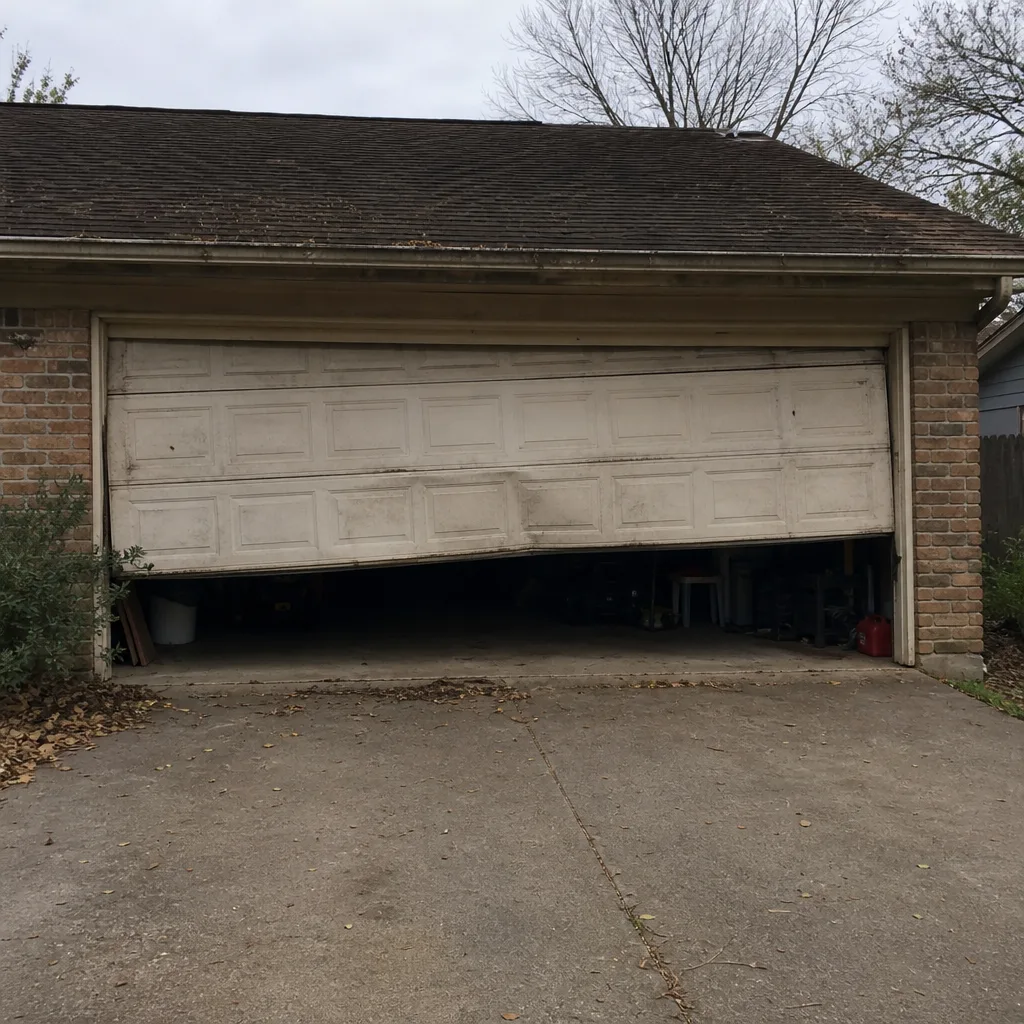 Before
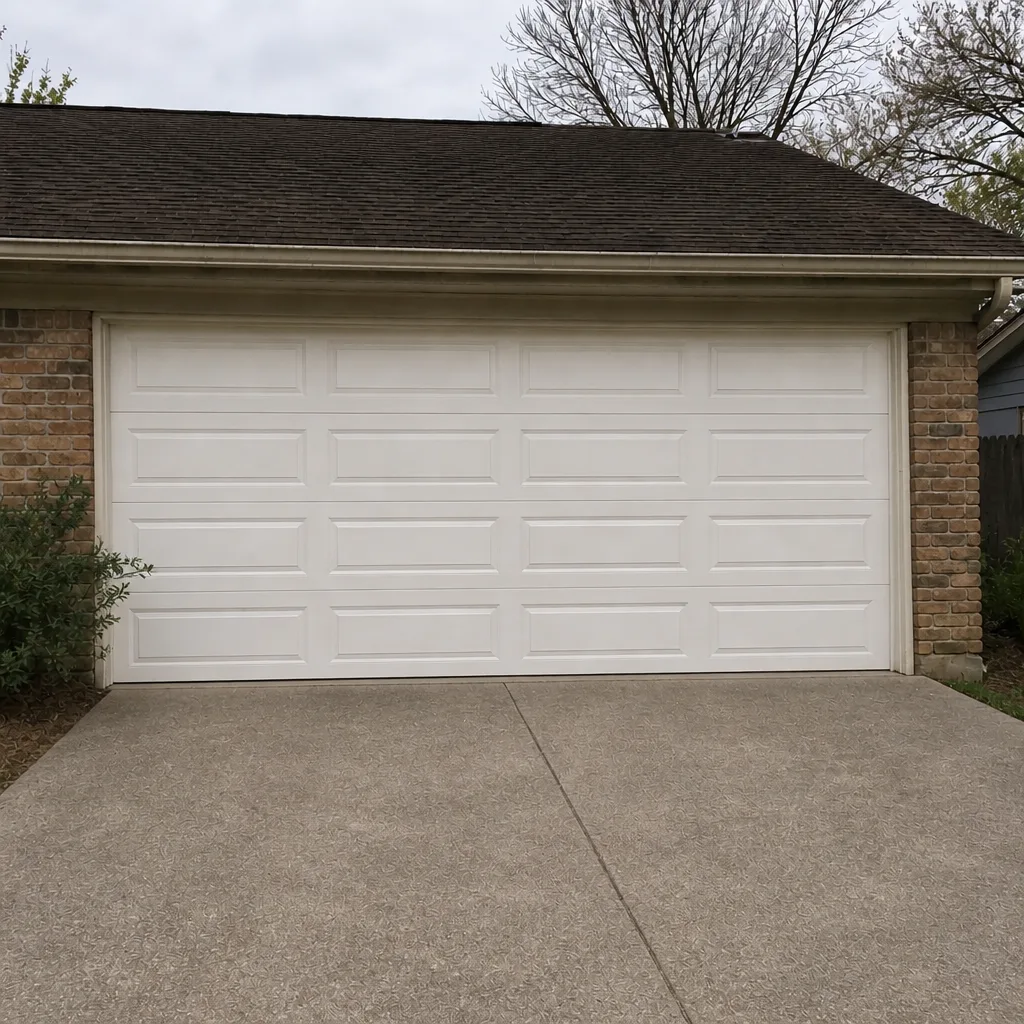 After
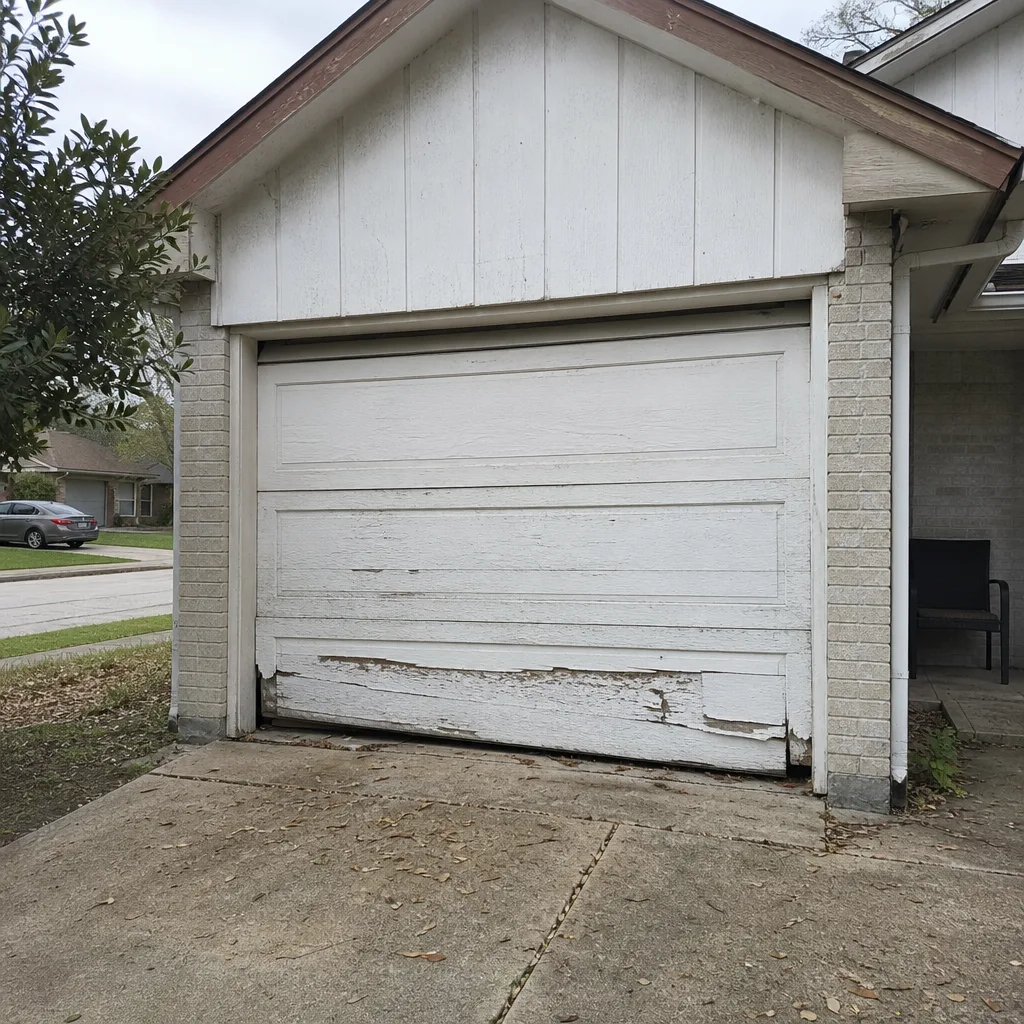 Before
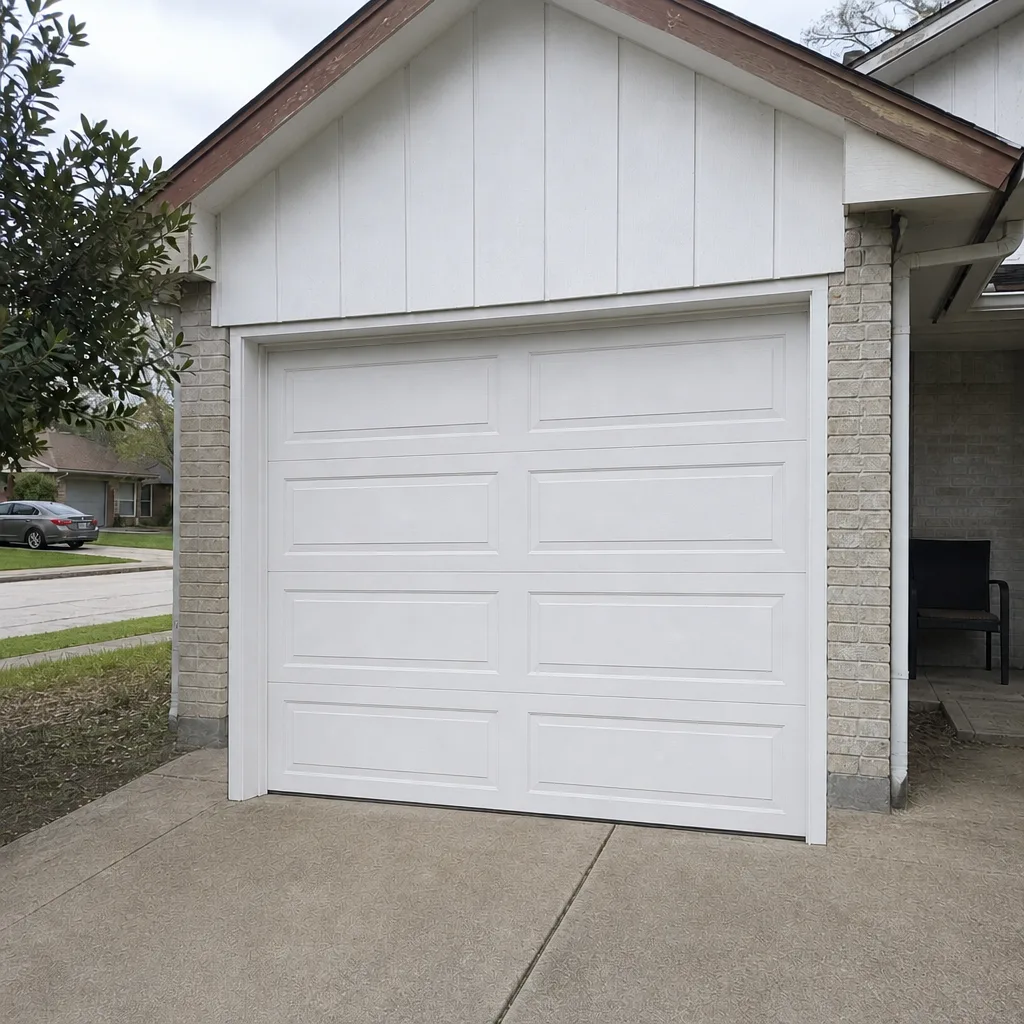 After
Common Mistakes to Avoid
- Treating the whole door as either fully DIY or fully professional. Blanket rules lead people to pay for a weatherstrip they could have done in twenty minutes, or to attempt a spring they should not touch. Decide task by task.
- Using a general handyman for spring or cable work. The job requires specific tools and familiarity with the exact system on your door. A generalist calling for a garage door specialist costs less in the end than a second attempt at a tensioned part.
- Ignoring a balance problem until the door won’t move. A door that’s already off-balance and dragging in Mission Bend’s heat will fail. Address the symptom early, when the repair is smaller.
- Relying on the opener to solve a mechanical problem. If the door is unbalanced, forcing it with a stronger opener just moves the stress to the opener’s motor and gears. Fix the door first, then the opener.
- Skipping the monthly manual release and auto-reverse test. This is the skipped task that turns a small issue into an emergency. A door with a failed safety reverse is a dangerous door.
- Not reading the warranty before attempting a repair. A self-installed spring or opener can void coverage on a part that costs several hundred dollars. Check the warranty first, especially on a Clopay, Amarr or Wayne Dalton door.
- Trying cable and spring work in a hot garage, alone, with improvised tools. In a Mission Bend summer garage, the combination of heat, fatigue and improvised tools is exactly how serious injuries happen. Do the safe jobs yourself; hand off the tensioned ones.
When to Call a Professional
Call a professional whenever the job involves a torsion or extension spring, a cable, a bottom bracket, or the door’s balance. Call when a track is bent, when the door is off its tracks, or when the opener has a mechanical failure. Call when you’re replacing a door or a major component and want the manufacturer’s warranty to hold. And call when a monthly balance or auto-reverse test fails, since a door that won’t balance or reverse is a safety problem. For a safe, cosmetic repair like a bottom seal, you’re fine to handle it yourself; that’s the leg of the decision the guide deliberately leaves to you.
Mission Bend Garage Door Repair Pros offers free estimates in Mission Bend. We can work with your insurer if a repair is part of a claim, and we’ll give you a written price before any work begins. Call (855) 658-5076. We answer 24/7. Fast dispatch from 7am to 7pm, Sunday through Friday.
Frequently Asked Questions
No, garage door spring replacement isn’t a safe DIY job. Torsion and extension springs store large amounts of energy, and releasing or adjusting them without the proper winding bars and training can cause serious injury. The correct approach is to hand spring work to a trained technician; if you’re unsure what kind of spring you have, that’s another reason to call.
Weatherstripping, lubricating moving parts, cleaning and aligning photo-eye sensors, replacing remote batteries, and testing the manual release and auto-reverse are safe for most homeowners. Anything involving springs, cables, brackets or the door’s balance is a professional job. If a repair doesn’t touch a tensioned part, it’s usually fair game.
It can. Most manufacturers require proper installation and adjustment for the warranty to stay valid, so a self-installed spring or opener can void coverage on the part. Read the warranty paperwork before attempting a repair, especially on a branded door or opener system. If the warranty language is unclear, a professional’s written estimate will tell you what you’re getting covered.
Mission Bend summers regularly push garages past 100°F, which makes any adjustment involving cables or springs substantially more dangerous and harder to do with care. Heat also dries out rubber seals and rollers faster, so seal replacement and lubrication come up more often here. Do the safe jobs yourself; hand off the tensioned ones, especially in the heat.
A monthly manual release and auto-reverse test is the single most valuable thing a homeowner can do. It takes about five minutes, uses no tools, and catches balance and safety-reverse problems before they become a broken spring or a door that drops. If the door fails either test, don’t operate it; get it looked at.
We can often reach a same-day repair on a failed door, and our emergency garage door service is built for exactly that. Call (855) 658-5076 for an exact quote. We answer 24/7. Fast dispatch from 7am to 7pm, Sunday through Friday. The written estimate you get before work starts is the price you pay.
The Bottom Line
The DIY-versus-professional question on a garage door isn’t about how mechanically inclined you are. It’s about consequences. Weatherstripping, sensor alignment and monthly testing are yours to own, and they genuinely reduce the risk of a bigger failure. Springs, cables and structural hardware are a professional’s job, because the failure mode is injury, warranty loss, or a door that drops. Mission Bend’s heat tilts that divide further: it makes the risky jobs riskier and the safe jobs more frequent. Stay flexible, decide task by task, and call a specialist when the part you’re touching stores real energy. Call (855) 658-5076. We answer 24/7. Fast dispatch from 7am to 7pm, Sunday through Friday. Our technicians have up to 10 years of experience, and we keep spring work in-house.
Written by the team at Mission Bend Garage Door Repair Pros.