
Last updated November 22, 2026
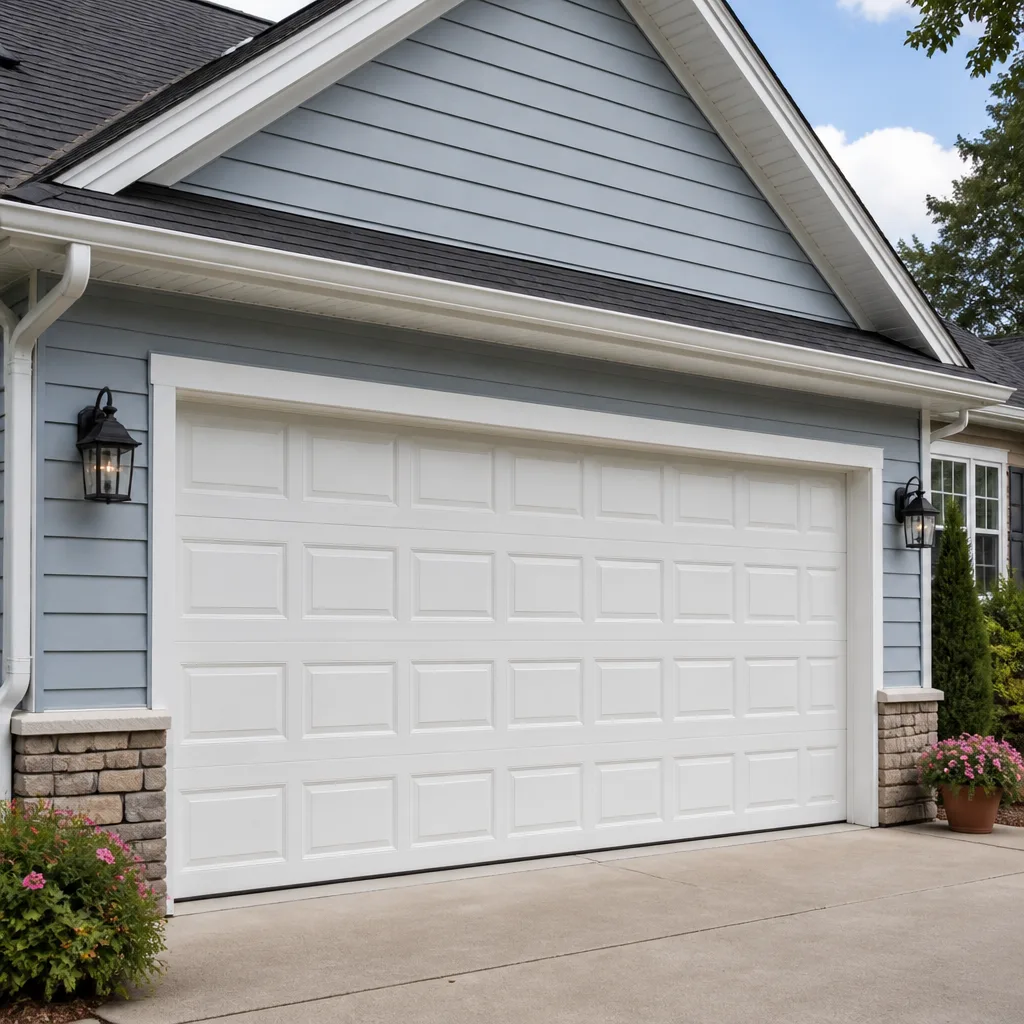 Raised-panel steel
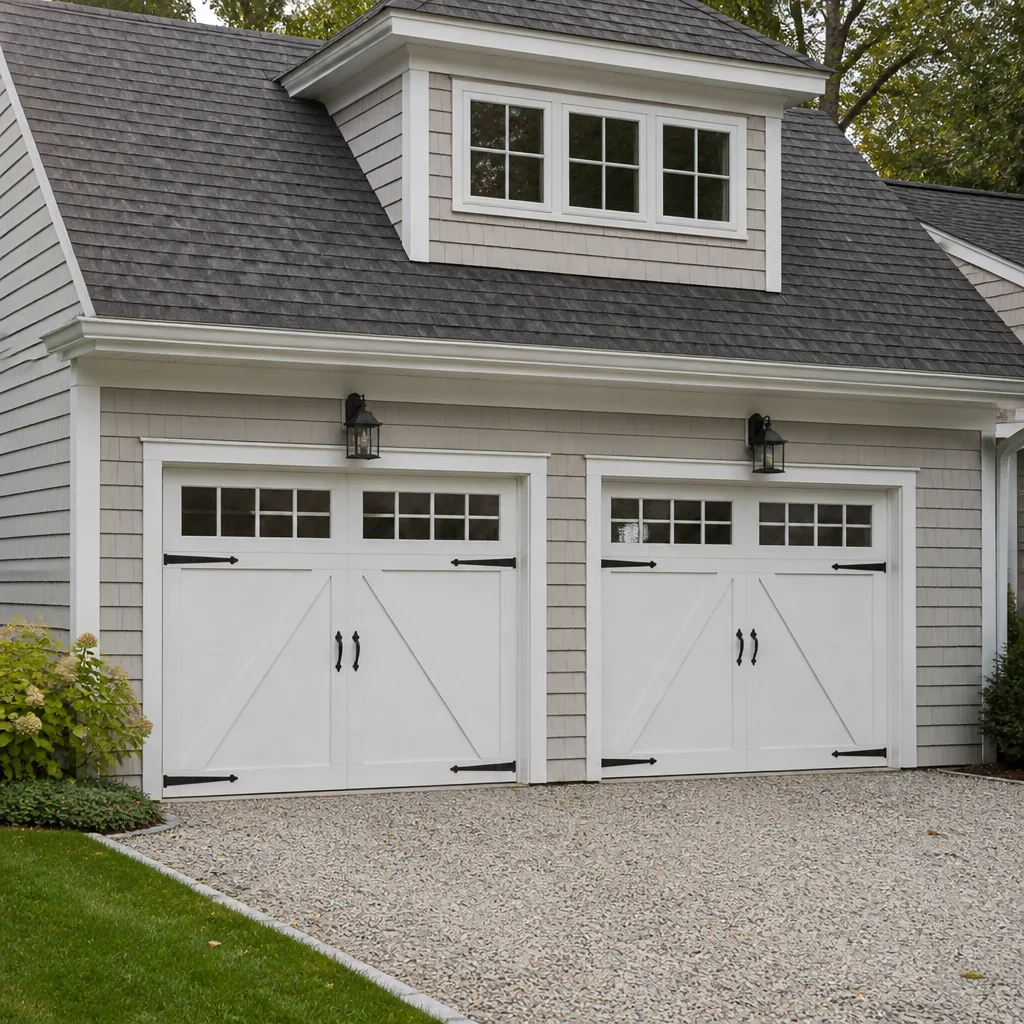 Carriage house
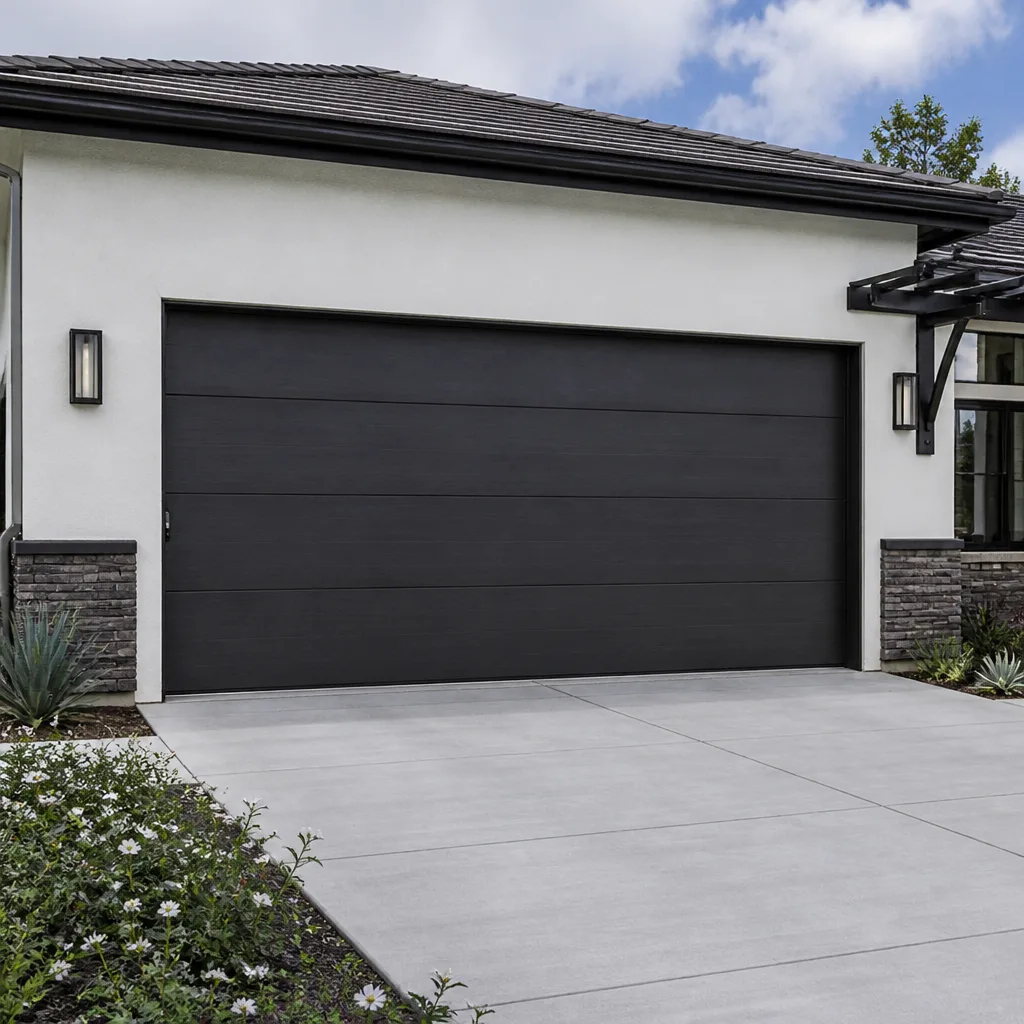 Modern flush
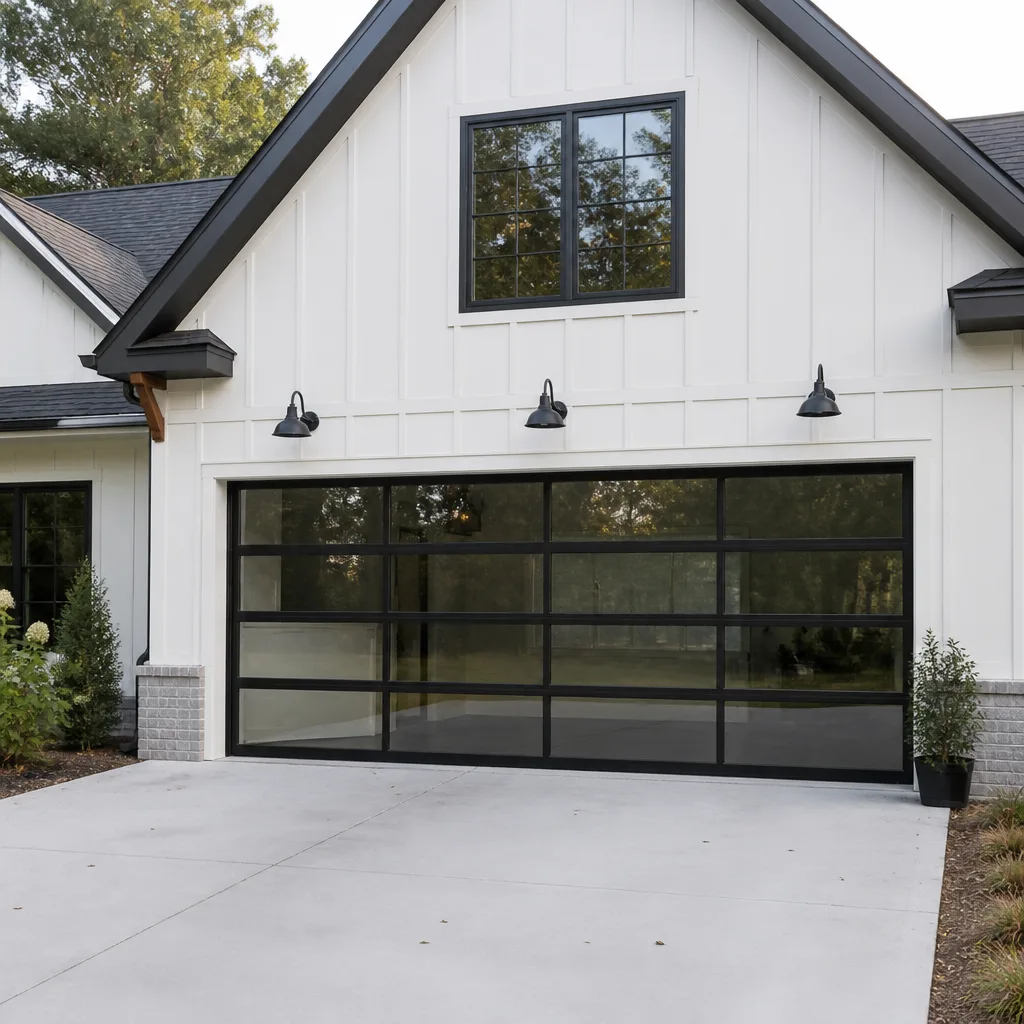 Full-view glass
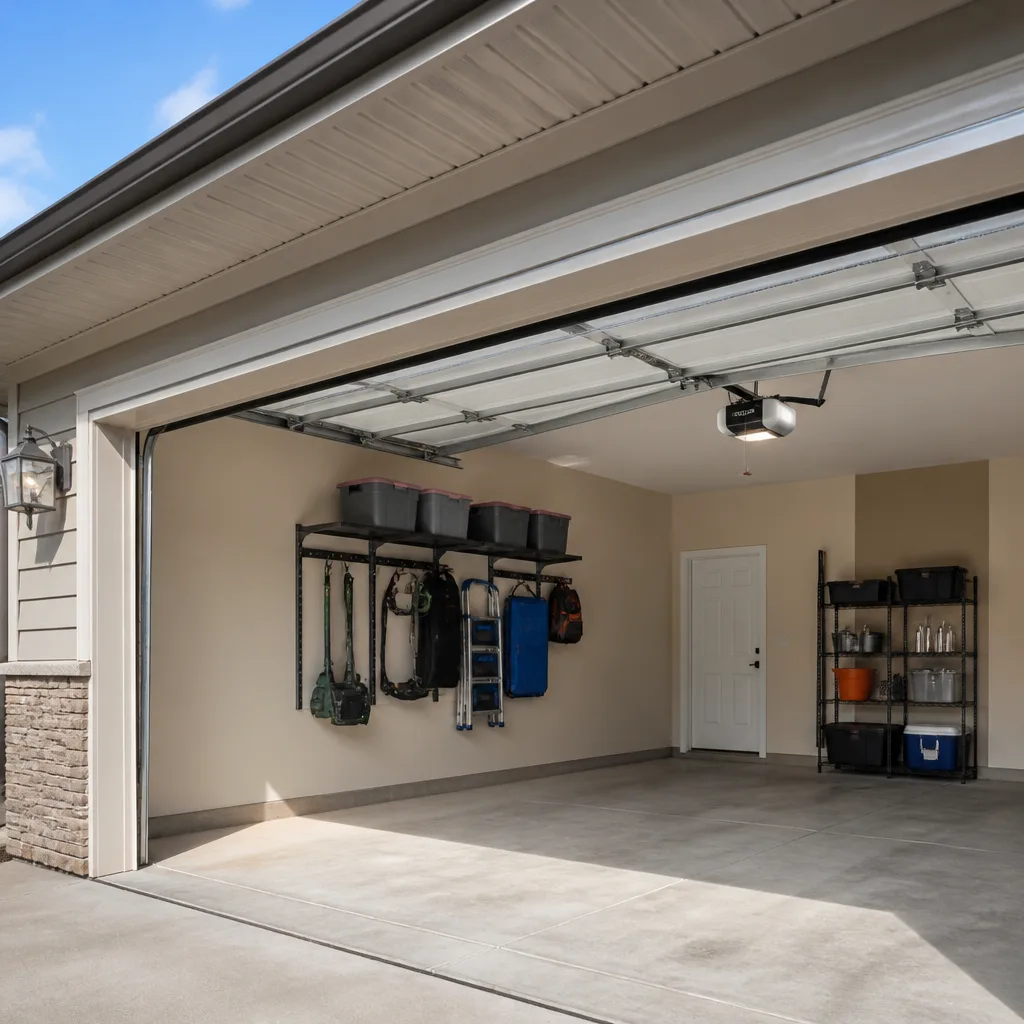 LiftMaster openers
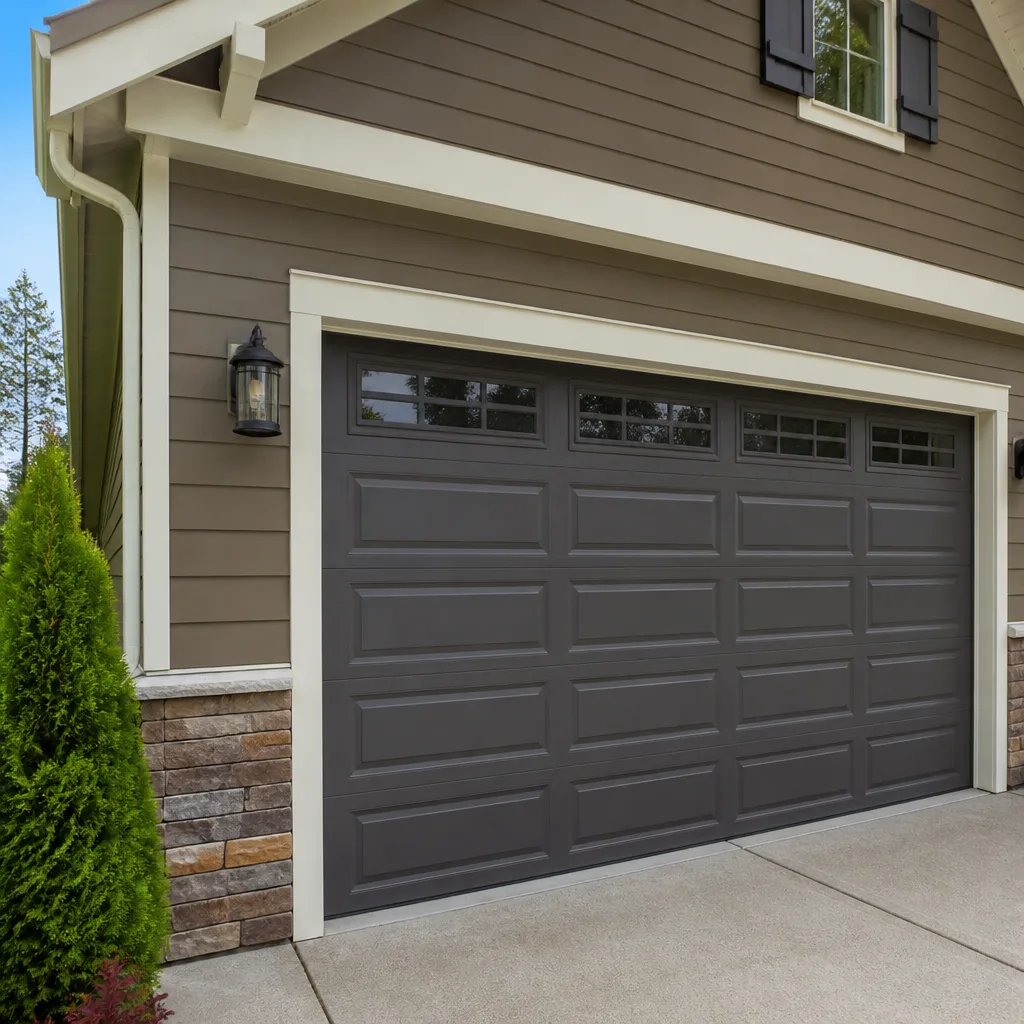 Chamberlain openers
Full 25-point door and opener safety check with every visit - springs, cables, rollers, tracks, and your LiftMaster or Chamberlain opener included
You get a price before we start. It does not change when the pro arrives.
Get your free estimateSeasonal Garage Door Care for Mission Bend: Year-Round Homeowner’s Guide
The month most likely to break a torsion spring in Mission Bend isn’t January. It’s the first stretch in December when overnight lows finally dip below 50°F. Metal contracts quickly, and a spring that spent four months holding a sagging door in a 110°F garage has no slack left to give. The cold snap gets blamed, but the damage was set up in August. A garage door here lives through a hot, humid summer, two mild shoulder seasons, and a short wet winter, and each one wears a different part of the system. This guide maps maintenance to those actual Mission Bend seasons instead of a generic calendar, so you know what to check and when.
Quick Answer
Seasonal garage door care in Mission Bend follows the local climate, not the standard four-season checklist: prep rollers, tracks and opener boards in April before the garage heat peaks, monitor intermittent opener faults through July and August, inspect hinges and weather seals after Gulf thunderstorms in spring and fall, and lubricate and check springs in late November before the brief cold snaps begin. Most of this is visual inspection and lubrication you can do yourself. Springs, cables, and opener wiring belong to a trained technician.
Styles & brands we work with
- Raised-panel steel
- Carriage house
- Modern flush
- Full-view glass
- LiftMaster openers
- Chamberlain openers
Table of Contents
- Why Mission Bend Has Its Own Garage Door Calendar
- Spring Shoulders (March-May): The Post-Storm Inspection Window
- Pre-Summer Prep (April-May): Before the Garage Becomes a Heat Box
- Mid-Summer Monitoring (July-August): When the Opener Starts Acting Up
- Fall Shoulders (September-November): The Second Storm Window
- Winter Readiness (December-February): Cold Snaps and Springs
- Soil Moisture, Settling Floors, and Opener Travel Limits
- The Mission Bend Seasonal Care Calendar at a Glance
Why Mission Bend Has Its Own Garage Door Calendar
Most seasonal garage door advice is written for places with hard freezes and heavy snow. Mission Bend doesn’t work that way. Our year splits into a long, hot summer that starts earlier than the calendar suggests, two mild shoulder seasons where Gulf moisture drives thunderstorms through, and a winter that’s short and wet rather than cold. Those three patterns stress a door in three different ways, and only one of them involves cold at all.
Here’s what each season actually does to the parts on your door:
- Summer heat softens nylon rollers, cooks the lubricant out of hinges and springs, and pushes opener logic boards toward thermal shutdown. A garage with a west-facing wall can run dramatically hotter than the outdoor air.
- Storm season works on the seals, tracks and hinges. Wind-driven rain finds gaps, humidity swells wood door panels, and the debris a storm throws around gets into tracks.
- Winter cold snaps hit steel. Torsion and extension springs, already at high tension, become less ductile as temperatures fall, and that’s when a fatigued spring gives up.
The practical takeaway is that the tasks you’d spread across a full year in a colder climate get compressed here. Mission Bend homeowners get the most out of their doors by treating April and November as the two big anchor months, and everything in between as monitoring. That’s the frame the rest of this guide uses, and it’s the same frame our technicians work from when they’re diagnosing a door in Mission Bend.
Spring Shoulders (March-May): The Post-Storm Inspection Window
Spring in Mission Bend is mild, and that’s exactly why it’s the right time to look everything over. A garage door that survived the hot season and the winter hasn’t been asked to do anything hard yet, so problems show up honestly. The spring shoulder is also when Gulf-driven thunderstorms start rolling through, which means the inspection isn’t optional if you want to catch water intrusion before it becomes a rot or corrosion problem.
Run this post-storm inspection after any storm with heavy wind or sideways rain:
- Walk the door from the outside. Look for standing water at the bottom seal, gaps under the threshold, and panels that look out of line with each other.
- Check the bottom weather seal. A seal that’s cracked, torn, or stiff won’t sit flat after the storm, and that lets water and pests in.
- Look at the tracks. Debris blown in by wind is the most common reason a door suddenly starts rubbing after a storm. Clear small debris with a damp cloth; if a track is bent, stop and get it looked at.
- Open and close the door once and listen. A new grinding or popping sound after a storm usually means a roller or hinge moved out of position.
- Check the hinges for rust. Our humidity is hard on hinge pins. A little surface rust is normal; bright orange flaking means the joint is dry and needs lubrication.
- Test the safety reverse. Put a piece of wood flat under the door and close it. It should reverse on contact. If it doesn’t, that’s a call-right-away issue.
If your door is a wood-panel Clopay or Amarr model, pay extra attention to the bottom rails and any panel seams after the spring storms. Wood swells with humidity and doesn’t always shrink back cleanly, and a swollen panel can start binding in the track. That’s one of the reasons we recommend having a professional check a door that’s been through several storm seasons, especially before the summer heat arrives. The same inspection pass is a good time to book garage door repair for any small issue you’ve been putting off.
Pre-Summer Prep (April-May): Before the Garage Becomes a Heat Box
April is the most valuable maintenance month on the Mission Bend calendar, and it gets the least attention. The reason is simple: once summer arrives, the garage turns into a hot box, and everything in it works harder. Nylon rollers soften. Lubricant cooks off hinge pins and spring coils. Opener logic boards run closer to their thermal limits. Prep the system in April and you spend the summer opening the door without thinking about it.
Do these tasks before the first long hot stretch:
- Lubricate rollers, hinges and the spring coils with a garage-door-specific lubricant, not household oil or grease. Dry or lithium spray on the moving joints, wiped clean first. This is the single highest-value task before summer.
- Clear the track of grit. A dry cloth or soft brush along the inside of both tracks. Do not use a solvent on the track surface, and don’t lubricate the tracks themselves on most door types.
- Check the opener’s physical mounting. With the door closed, grab the rail and see if it shakes. A loose mounting bracket rattles all summer and stresses the opener housing.
- Look at the wall outlet and low-voltage wiring the opener uses. If the outlet is warm to the touch or the wiring jacket is cracked, stop and call a professional to look at it. Opener wiring is not a homeowner job.
- Replace the opener’s battery backup if it’s aging. A battery that’s already weak gets worse in a hot garage, and it’s the thing that gets you through a power outage.
- Wipe down and inspect the photo-eye sensors. Dust settles on the lenses over a dry spring, and a dirty lens is a common cause of a door that won’t close.
If your garage faces west and takes the afternoon sun full on the door, consider whether the door’s finish is due for attention. Faded or chalky paint on a steel door is cosmetic at first, but a finish that’s broken down lets moisture into panel seams. A Genie or Chamberlain opener paired with a door that’s heavier than it should be adds load to the motor, so don’t skip the door itself when you’re prepping for summer.
The single biggest thing that fails on a Mission Bend door without warning is a spring, and we can’t say that often enough: springs are under extreme tension, they are the most dangerous part of the whole system, and no homeowner should try to adjust, tighten or replace one. Have a technician inspect them during your pre-summer prep instead. Our team handles garage door spring repair as part of the standard service lineup, so a tired spring gets caught before it fails in July.
Mid-Summer Monitoring (July-August): When the Opener Starts Acting Up
This is when the calls start coming in. The door opens halfway and stops. It opens fine in the morning and fails in the afternoon. It reverses for no reason, then works again an hour later. In Mission Bend heat, that pattern usually isn’t a dead opener. It’s a heat-stressed one.
The core cause is thermal. Opener logic boards, motors and transformers have operating temperature ranges, and a garage with the sun on it all day can push past what the manufacturer expected. When a board gets too hot, it can do exactly what an intermittent electrical fault does: shut down, glitch, or reset. Some openers have thermal protection built in and will simply stop until they cool. Others just behave erratically.
Here’s how to sort out whether heat is the problem:
- Note the time of day the failure happens. If it’s consistently late afternoon and fine in the morning, heat is the prime suspect.
- Check the opener’s LED or diagnostic display. Many modern openers flash a code that tells you what the board is complaining about. Photograph it.
- Ventilate the garage. Open a side door, crack a window, or run a fan near the opener unit. If the problem clears up, you’ve confirmed it.
- Check the wall control and remote separately. If the wall button works and the remote doesn’t, it’s a remote or receiver issue, not a heat problem.
- Look at the travel limit settings. A limit setting that’s drifted slightly, combined with a door that’s expanded in the heat, can produce a door that stops short.
- Do not open the opener housing. Line voltage and stored capacitor charge are inside. Call a technician if the intermittent behavior continues after ventilation.
Intermittent opener failure in a Mission Bend summer is often a two-part problem: the board is heat-stressed, and the door itself is heavier than it should be because rollers or hinges have stiffened up. Our team diagnoses both, and we work on the big names you’re likely to find installed, from a Genie or Chamberlain belt drive to a Wayne Dalton unit that’s been in service a while. If you’ve got a dedicated garage door opener repair issue that keeps coming back, get it looked at before the next hot stretch.
Fall Shoulders (September-November): The Second Storm Window
Fall in Mission Bend is mild, and it brings the second round of Gulf-driven thunderstorms. Everything you did after the spring storms, you do again now, with two additions. The first is that fall rain falls on a door that’s been through a full summer, and summer is hard on seals and hinges. The second is that this is your last good window to prep before the cold snaps arrive.
The fall protocol is a condensed version of the spring one:
- Inspect the weather seal again, especially if your spring inspection found wear. The heat softens the seal, and then rain and debris work on it.
- Do a full track and roller check. Summer grit accumulates in the corners, and a roller that’s been running rough all summer will be visible now.
- Test the safety reverse. Same test as spring: wood under the door, door should reverse. If it doesn’t, call.
- Look at the door panels for warping or separation. Any panel that’s moved out of line is a track and hinge issue, not a cosmetic one.
- Lubricate now, before the temperature drops. Dry or cold lubricant doesn’t flow into hinge pins as well as it does in mild weather.
If your door has a manufacturer’s weatherstripping that’s more than a few years old, this is the time to think about it. Most garage doors also have a bottom seal that’s replaceable and a side jamb seal that’s the first line of defense against wind-driven rain.
Fall is also the right season to think about a full door replacement if your door has been patched one too many times. A door that’s had repeated panel repairs, or a bottom section that’s rotted out, doesn’t get better with age. When your door has reached that point, our team handles complete garage door installation, so the same people who’ve been keeping the door running can help you plan the replacement when it’s time. It’s a planned project rather than an emergency, so we measure, order, and schedule it properly.
Winter Readiness (December-February): Cold Snaps and Springs
Mission Bend winters are short and wet, not cold. But the cold that does arrive is disproportionately hard on springs. Here’s why. A torsion spring is a steel bar held under significant tension, and steel loses ductility as it cools. A spring that’s been slowly fatiguing all summer and fall has less margin, and the first real cold snap is when it gives. That’s why the most likely month for a snapped spring here isn’t the coldest one, it’s the first one with a sustained stretch below 50°F.
What to do before the cold snaps:
- Lubricate the springs themselves. A light coat of garage-door lubricant on the coils reduces friction and corrosion. Do this in late November, not in the middle of a cold snap.
- Listen to the door in cold weather. A door that squeals or groans when it’s cold but doesn’t in mild weather is telling you a hinge or roller is dry.
- Watch for a door that opens but won’t stay up. That’s a spring that’s lost tension, and it needs a professional. Do not try to adjust it.
- Check the bottom seal for a hard, cracked edge. Cold makes an old seal brittle, and it stops sealing properly against wind-driven rain.
- Verify the opener’s battery backup still holds. A cold battery is a weak battery.
Any time the door’s balance feels off, keep your hands away from the springs. That means don’t treat a slow, sagging door as a winter lubrication problem. Have a technician check the balance first. A torsion spring under tension can cause serious injury if it’s mishandled, and it’s not a job for a homeowner even on a mild day in Mission Bend. Our technicians have up to 10 years of experience with springs, and they can tell you in a few minutes whether the spring, the cables, or the opener is the actual cause.
Soil Moisture, Settling Floors, and Opener Travel Limits
This is the section most garage door guides skip, and it’s the one that solves a lot of stubborn problems in Mission Bend. Our soils move with moisture. Wet winters and dry summers mean the slab under the garage and the driveway in front of it can settle slightly, and a floor that moves changes the geometry of how the door sits.
What you notice when the floor has shifted:
- The door closes but doesn’t quite seat on the seal, leaving a visible gap on one side.
- The door opens but stops short of the fully open position.
- The opener reverses on its own near the bottom of travel.
- The bottom seal looks compressed on one end and untouched on the other.
Some of these are travel-limit adjustments. On most modern openers, the travel limits are set with up/down or open/close adjustments on the unit, and after a floor settles, the door’s fully closed position changes. You can usually adjust the travel limits with the opener’s adjustment controls. What you should not do is adjust the force limits to compensate. A force setting that’s too high is how doors get damaged and how people get hurt. If you’re not sure whether you’re adjusting travel or force, stop and call.
If the floor has settled unevenly, a technician can shim the track or adjust the jamb brackets so the door sits square again. That’s a mechanical adjustment with a right and wrong answer, and it’s worth having done correctly rather than by feel.
The Mission Bend Seasonal Care Calendar at a Glance
Here’s the whole year in one place. Print it and put it on the wall of the garage.
- March-May: Post-storm inspection (seals, tracks, hinges), safety-reverse test, check for panel swelling on wood doors.
- April-May: Full lubrication of rollers, hinges and springs. Clear tracks. Check opener mounting and wiring. Inspect springs.
- June: Confirm photo-eye sensors are clean. Note any new sounds.
- July-August: Monitor opener for heat-related intermittent faults. Ventilate the garage. Check travel limits.
- September-November: Second post-storm inspection. Lubricate before temperatures drop. Watch for panel warping or seal wear. Consider a planned door replacement if it’s due.
- December-February: Cold-snap spring awareness. Listen for cold-weather squeals. Check seal for cold brittleness. Confirm battery backup.
One more thing that isn’t on the calendar: the door balance test. Disconnect the opener (most have a release cord), open the door halfway by hand, and let go. A balanced door stays where you left it. A door that drops means the spring has lost tension, and that’s a professional’s job every time. Run that test in April and again in November.
Common Mistakes to Avoid
- Lubricating the tracks. The tracks are meant to stay clean and dry; lubricant attracts grit and the rollers start to slide instead of roll. Lubricate the rollers, hinges and springs, not the tracks.
- Adjusting force limits to fix a door that’s stopping short. A door that stops short usually has a travel-limit or balance problem. Raising the force setting masks it and adds risk. Get it diagnosed properly.
- Doing your pre-summer prep in June. By then the garage is already hot and the lubricant is already cooking off. April and early May are the months that matter here.
- Ignoring a new noise after a storm. A grinding or popping sound that shows up after a thunderstorm is usually a track or roller problem, and it gets worse fast.
- Treating cold-weather spring failure as sudden. It rarely is. The spring was fatigued long before the cold snap, and a balance check in the fall catches it.
- Trying to lubricate, tighten or otherwise touch the springs. Springs are under extreme tension. This is the one part of the door no homeowner should work on, and it’s worth repeating.
- Assuming an intermittent summer opener is just “old”. Heat-stressed logic boards and motors often fix themselves with ventilation and a proper diagnostic. Don’t replace an opener until a technician has actually looked at it.
See the difference
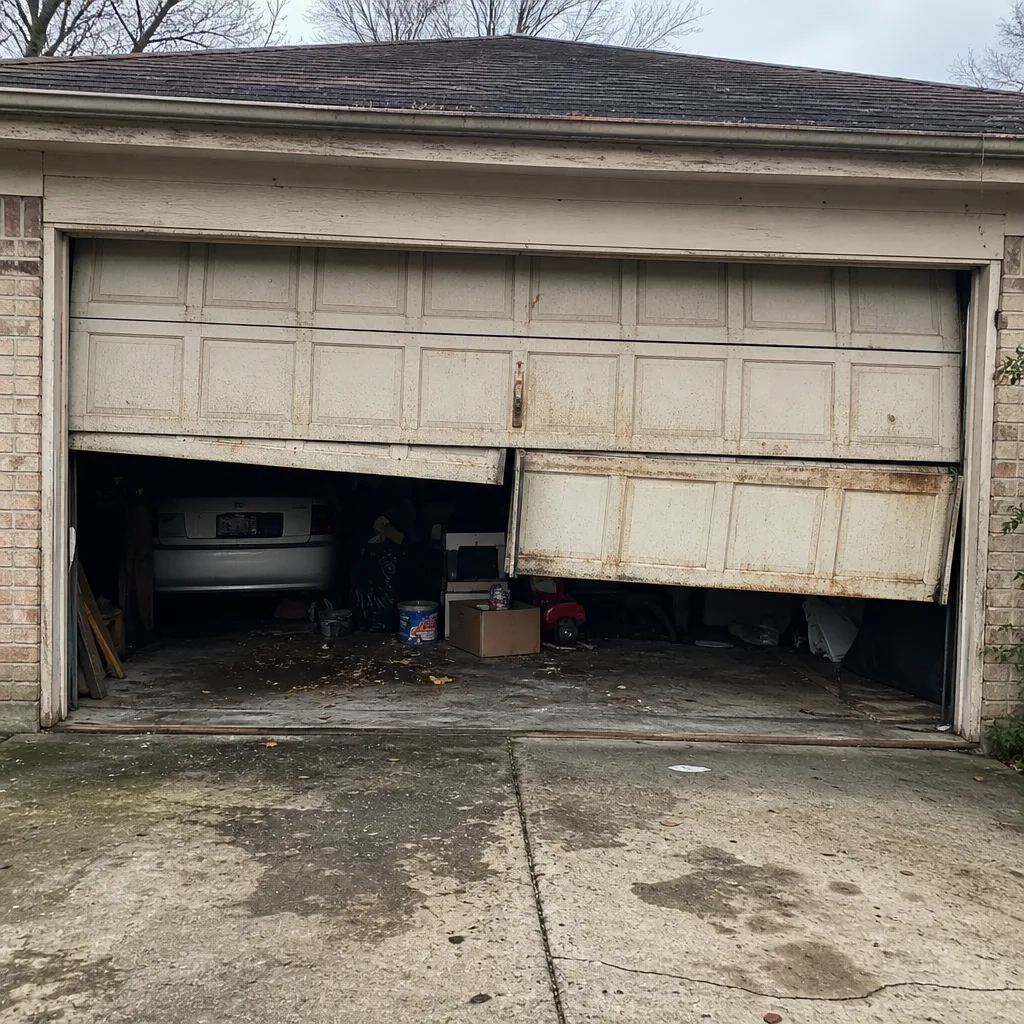 Before
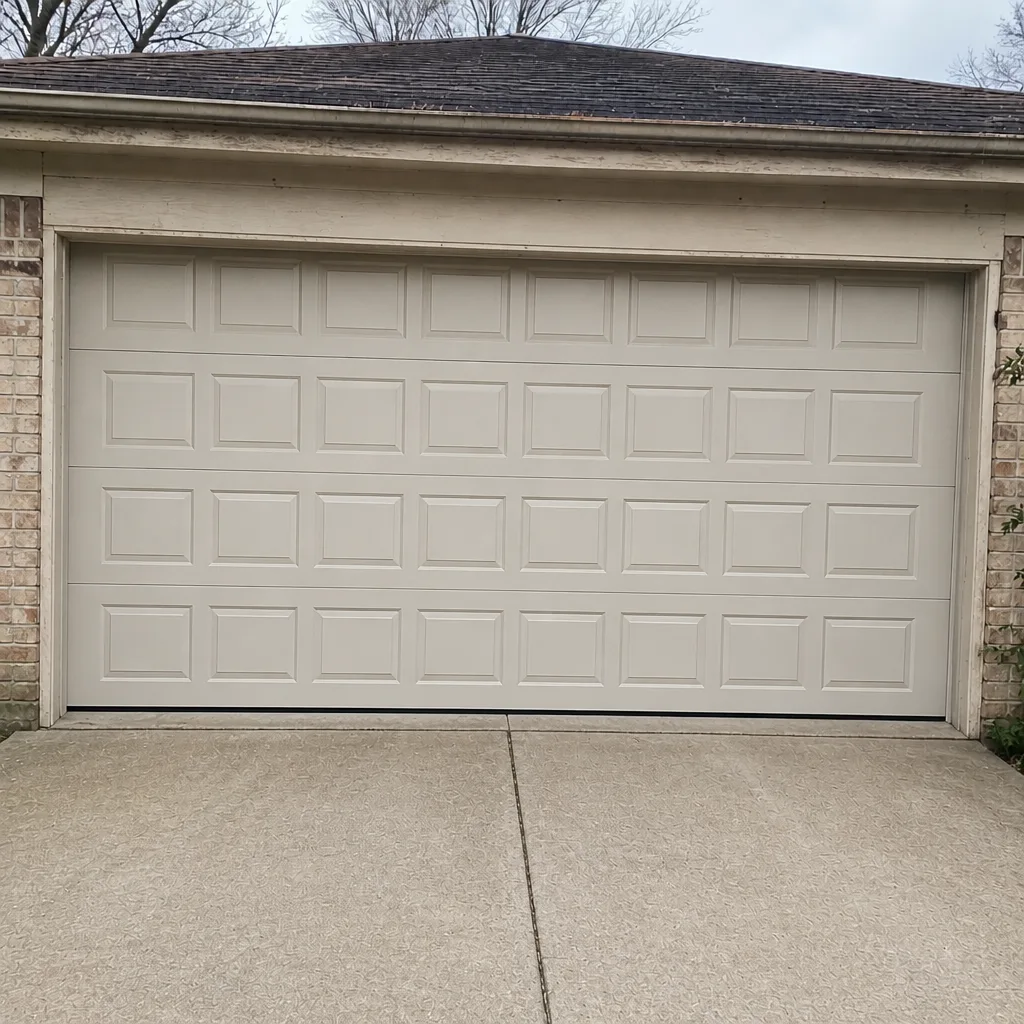 After
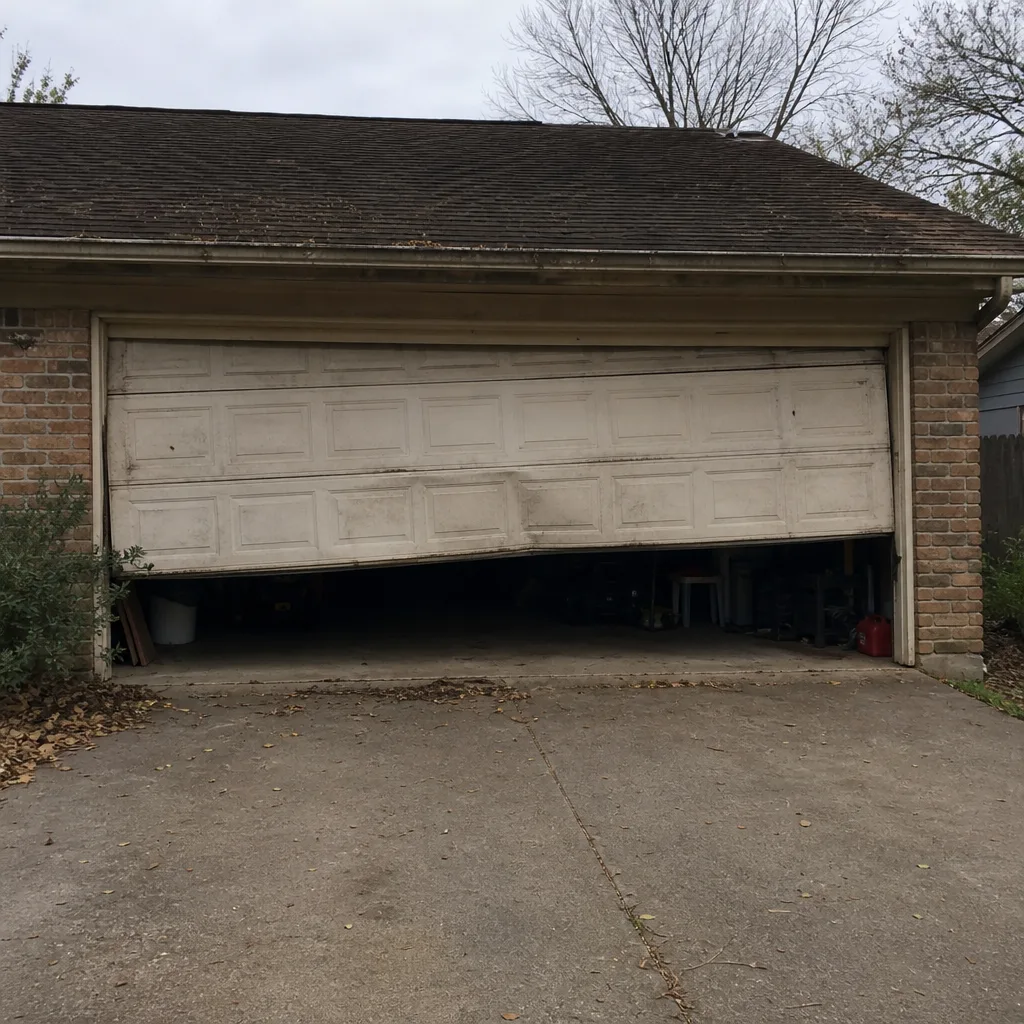 Before
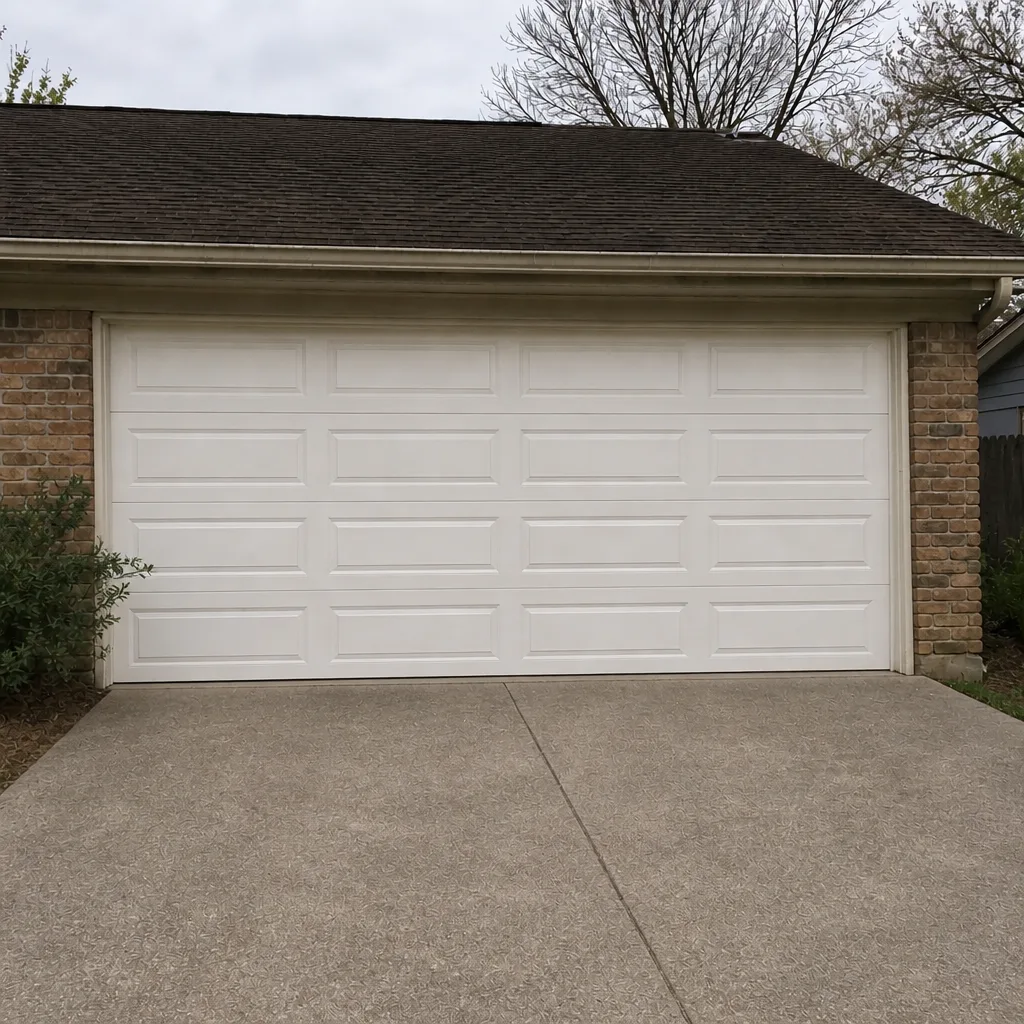 After
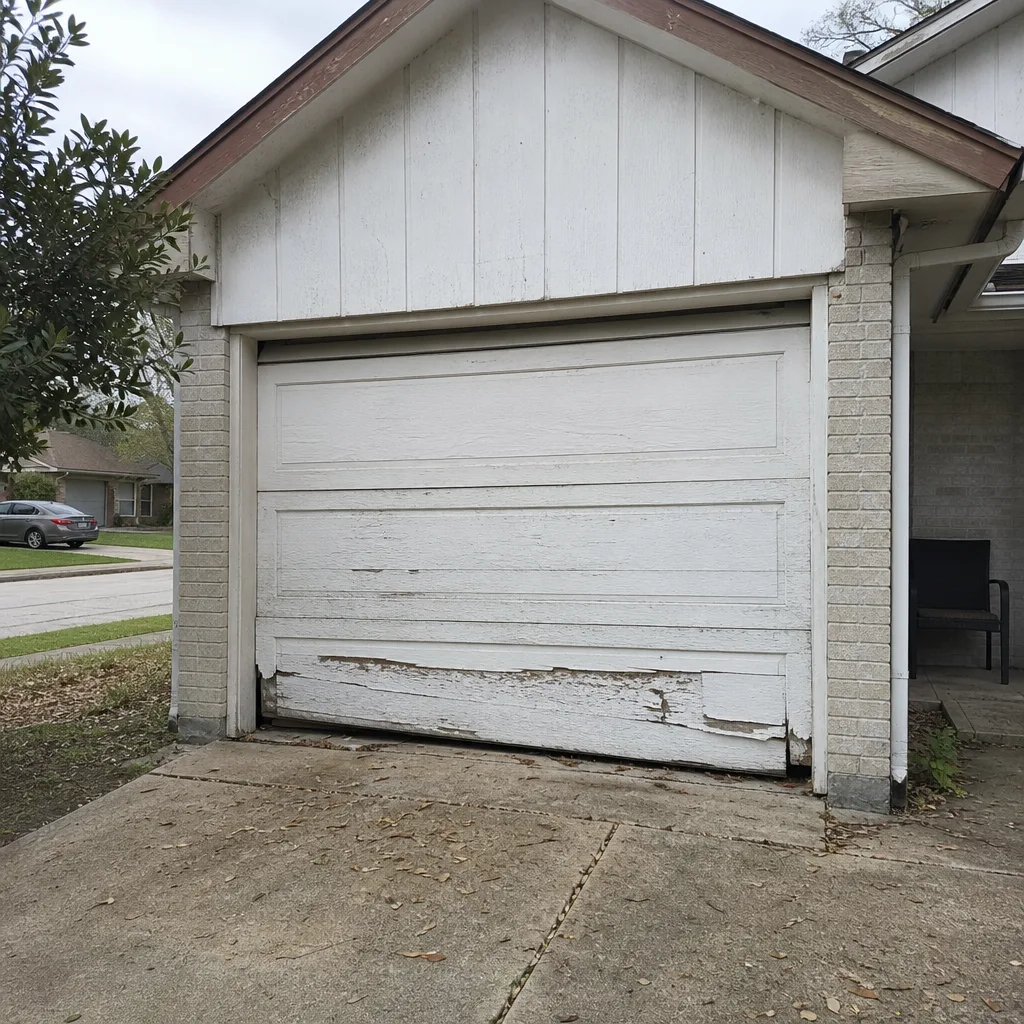 Before
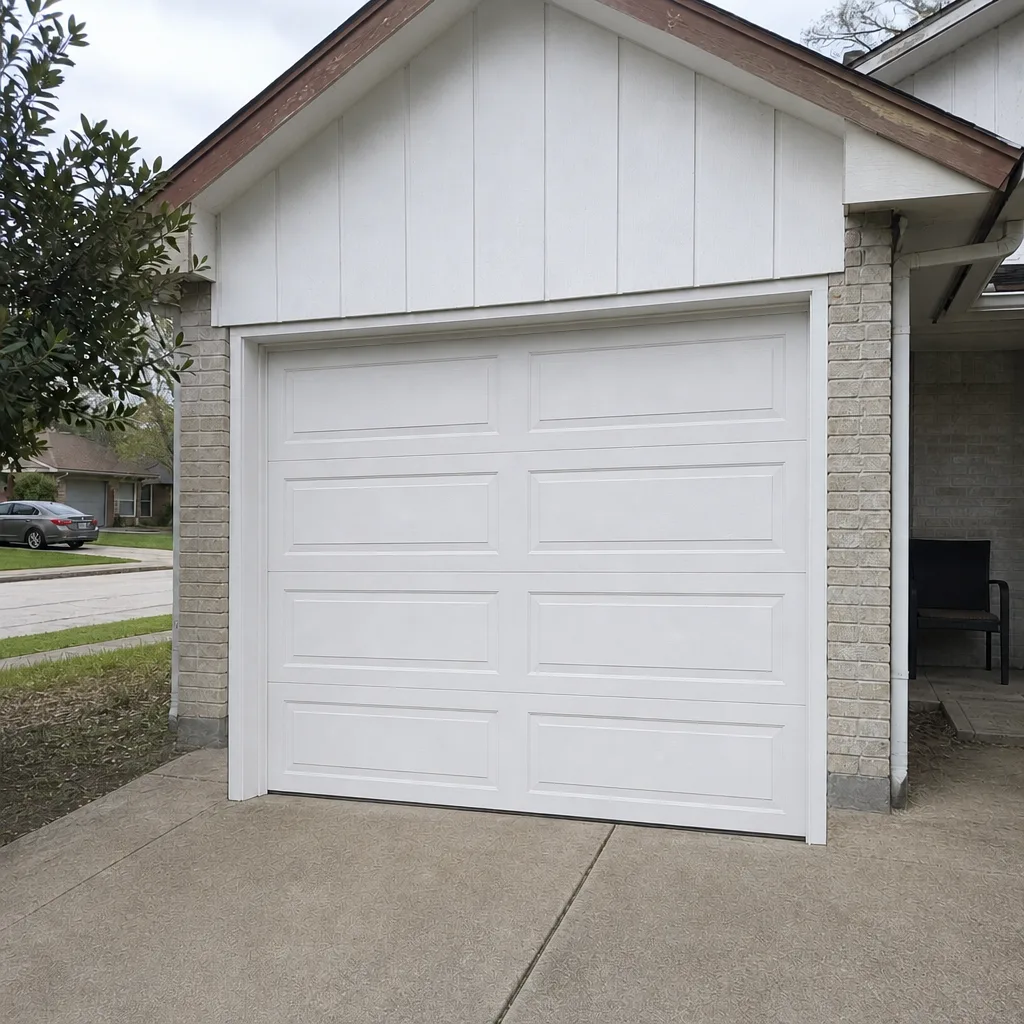 After
When to Call a Professional
Call a professional for anything involving springs, cables, or the inside of the opener housing. Those are the safety-critical parts, and a mistake there can cause serious injury. Call for a door that drops or won’t stay up when you test it by hand, a track that’s visibly bent, a door that comes off its rollers, or any opener fault that continues after you’ve confirmed the garage is ventilated and the door is balanced. Also call if the door’s safety reverse fails the wood-block test, if the door’s panels have warped or separated, or if the floor has settled enough that the door won’t seat on the seal after adjusting travel.
Mission Bend Garage Door Repair Pros offers free estimates in Mission Bend. Call (855) 658-5076. We answer 24/7. Fast dispatch from 7am to 7pm, Sunday through Friday. Our technicians are licensed and insured as their state requires, and the price is agreed in writing before any work starts.
Frequently Asked Questions
April. Getting lubrication, track cleaning and a spring inspection done before the garage heats up is the highest-value maintenance window on the local calendar. A door prepped in April works more quietly and fails less through July and August, and the pre-summer inspection is when a fatigued spring gets caught before it breaks. Call (855) 658-5076 for a free estimate if you want the inspection done right.
A heat-stressed opener is the usual reason. Logic boards and motors in a Mission Bend garage get pushed toward their thermal limits in July and August, and the result looks like an intermittent electrical fault: the door opens halfway, reverses for no reason, or stops until it cools down. Ventilate the garage and photograph any diagnostic LED code before calling. If it keeps happening, a technician can tell you whether the board needs replacing or whether the door is simply too hard to move. Call (855) 658-5076 for a free estimate.
You can apply a light coating of garage-door lubricant to the visible coils, which helps with corrosion, but you should never adjust, tighten or replace a spring yourself. Springs are under extreme tension and the most dangerous part of the system. If your door feels unbalanced, drops when you let it go halfway, or makes a new noise, get a technician to look at it. Call (855) 658-5076 and we’ll send someone out to check the balance first.
The usual sign is a door that closes but leaves a visible gap on one side, or one that stops short of fully open, especially after a wet winter or a dry summer. Travel limits are adjustable on most openers, but force limits are not the fix. If you’re not sure which setting you’re turning, stop and call. A technician can adjust the travel and shim the track so the door sits square. Call (855) 658-5076 for a free estimate.
No. The price is set by the written estimate, and it’s agreed before any work starts. We give you a written estimate after we’ve looked at the door, and the final invoice matches it. That’s the standard we hold to on every job in Mission Bend. Call (855) 658-5076 for a free estimate.
Yes. The local professionals we connect you with are licensed and insured as their state requires, and they work only on garage doors. Our technicians have up to 10 years of experience, and they work on the major brands you’ll find installed in Mission Bend, including Genie, Chamberlain, Clopay, Amarr, Wayne Dalton and more. Call (855) 658-5076 for a free estimate.
The Bottom Line
Seasonal garage door care in Mission Bend is really two anchor months, April and November, with monitoring in between. Prep the rollers, hinges, tracks and opener before the summer heat box sets in. Watch for heat-related intermittent opener faults in July and August. Run the post-storm inspection after spring and fall thunderstorms, since our storm seasons are when seals and tracks take the hit. Lubricate and check the balance before the December cold snaps, because that’s when a spring that’s been fatiguing all summer finally fails. And leave the springs, cables and opener internals to a trained technician. The rest is an hour or two of your time, twice a year, and a door that behaves.
If you’d rather have it inspected properly, or you’ve got a problem that’s already underway, call (855) 658-5076 for a free estimate. We answer 24/7. Fast dispatch from 7am to 7pm, Sunday through Friday. Whether it’s a spring, an opener, a panel, or a full door, that’s the one trade we do.
For a broader look at everything we handle, visit Mission Bend Garage Door Repair Pros.
Written by the team at Mission Bend Garage Door Repair Pros.