
Last updated November 22, 2026
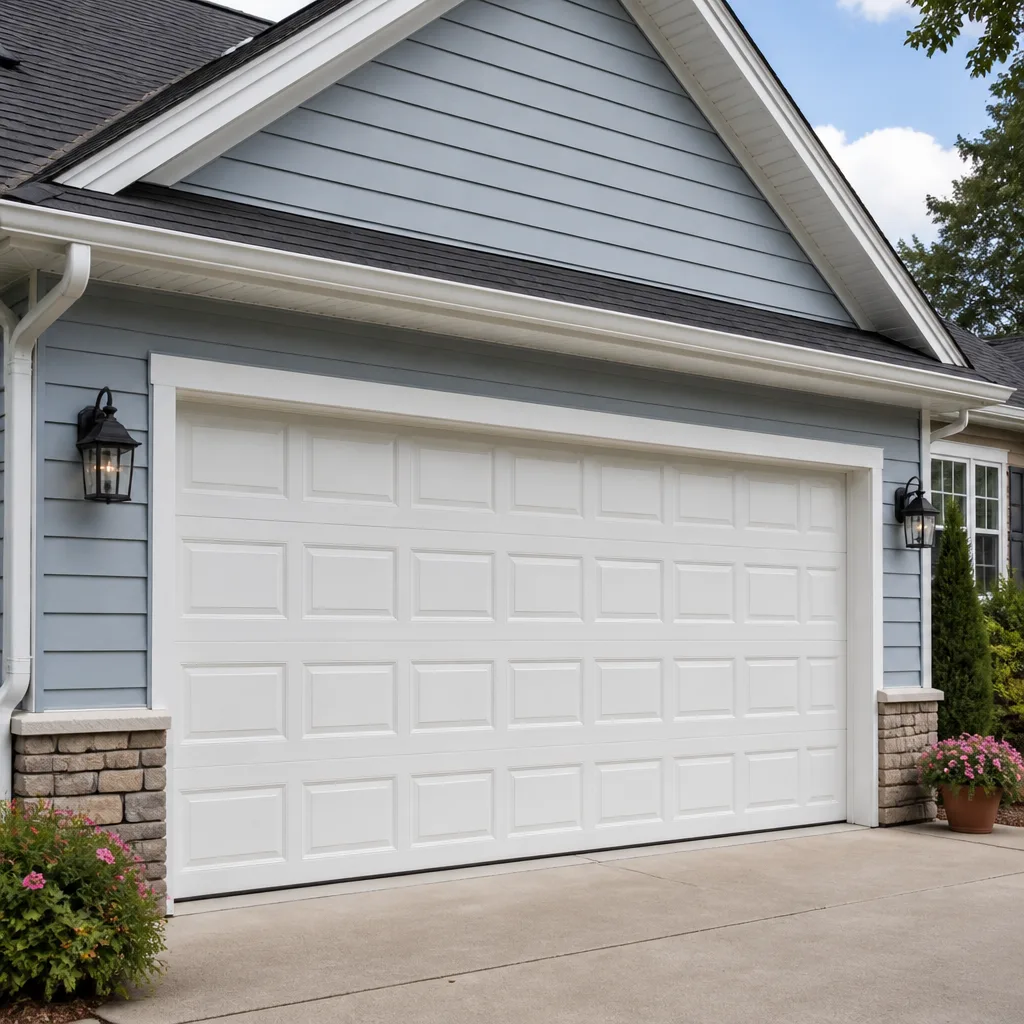 Raised-panel steel
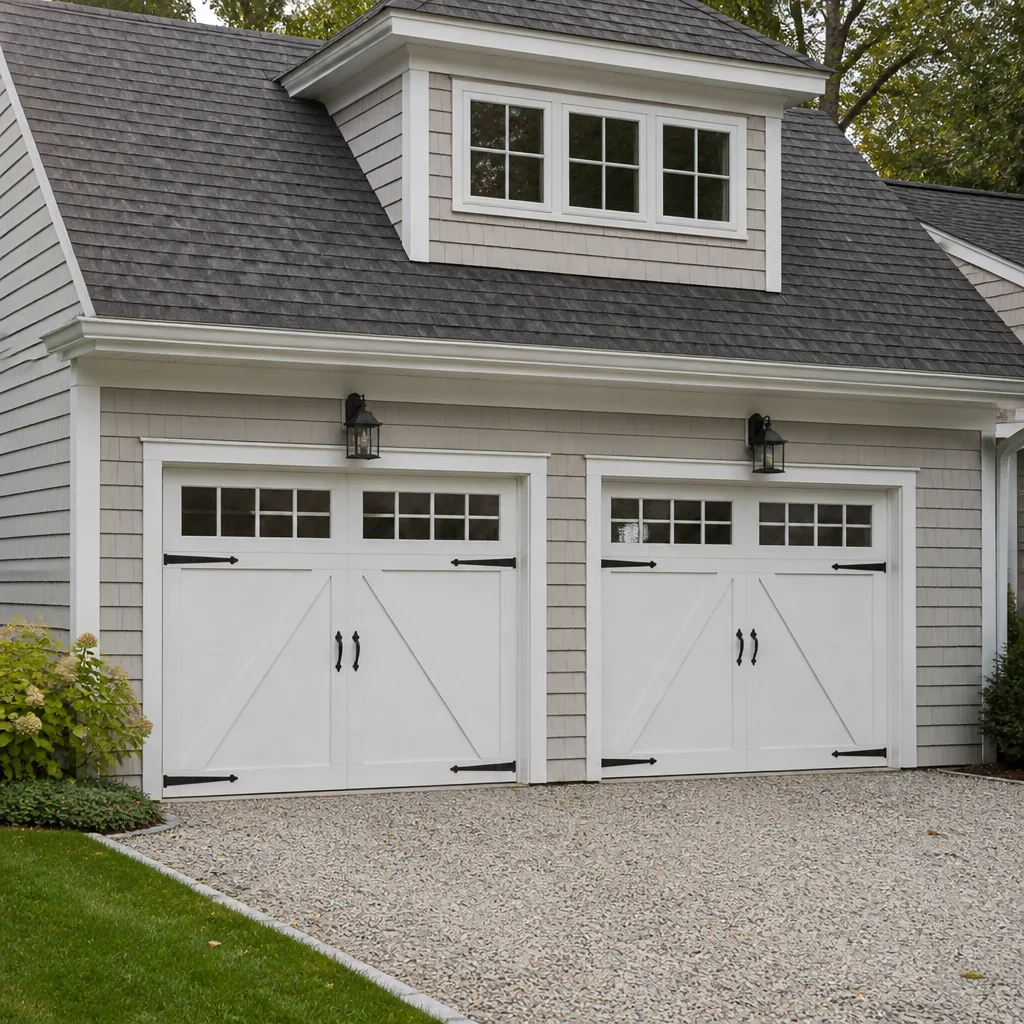 Carriage house
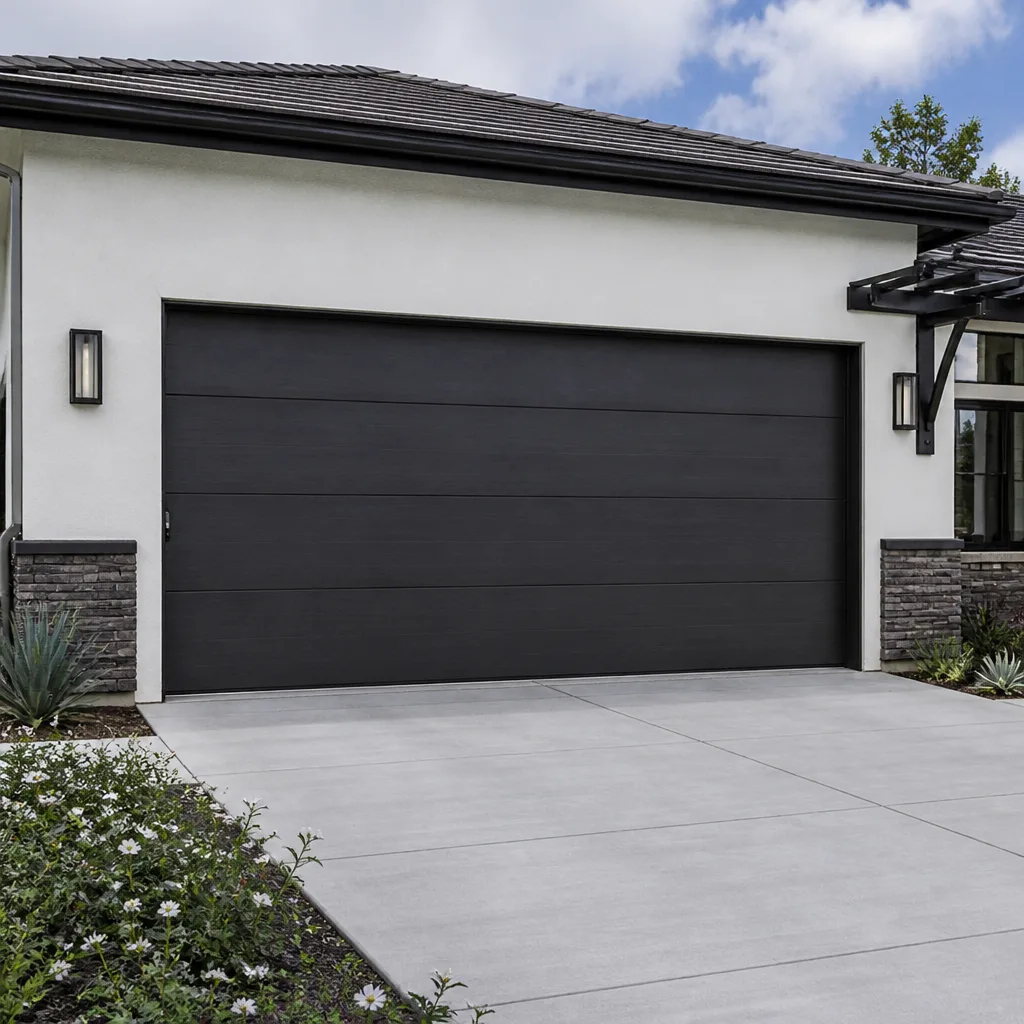 Modern flush
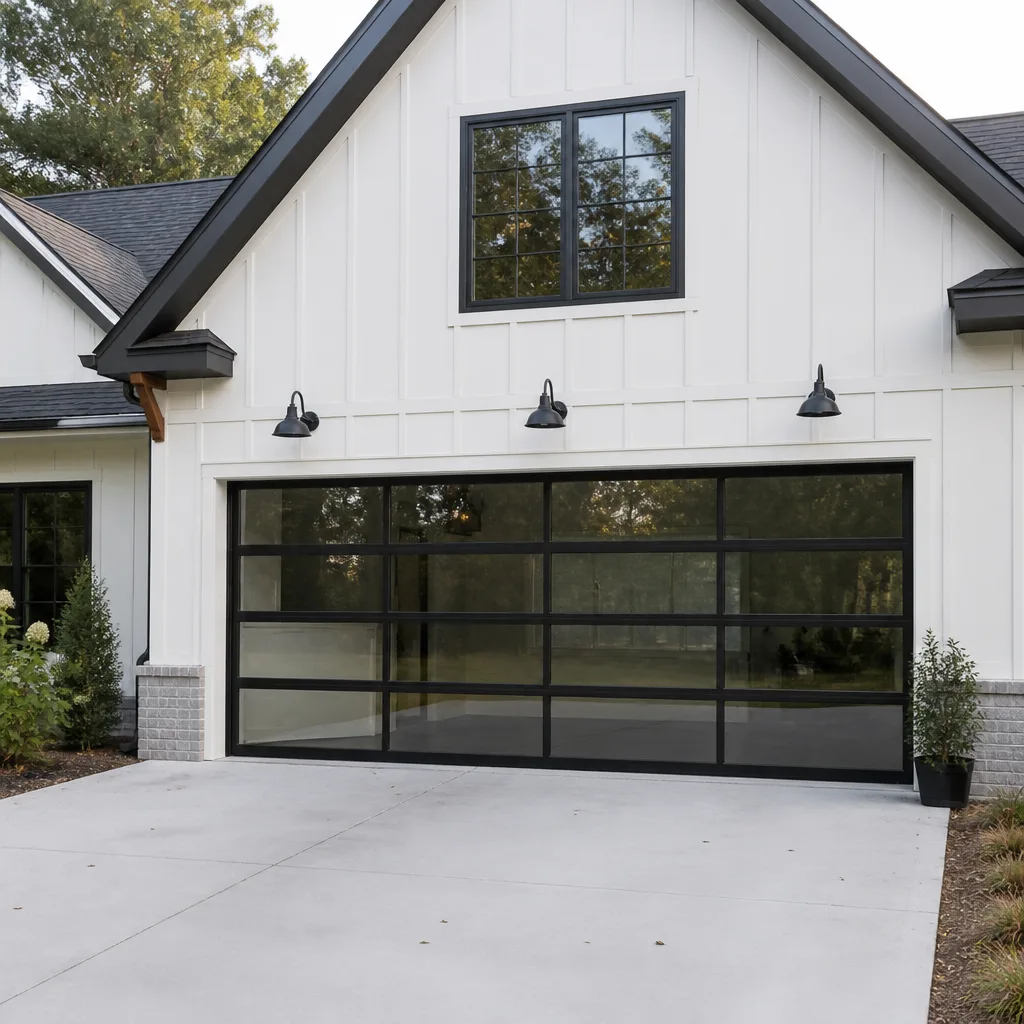 Full-view glass
 LiftMaster openers
 Chamberlain openers
Full 25-point door and opener safety check with every visit - springs, cables, rollers, tracks, and your LiftMaster or Chamberlain opener included
You get a price before we start. It does not change when the pro arrives.
Get your free estimateGarage Door Warning Signs: A Mission Bend Homeowner’s Reference Guide
A garage door that hesitates for half a second before it moves isn’t “sticking from humidity.” It’s the opener straining against a friction load that’s climbing toward the threshold where the motor burns out – a motor replacement that a cheap roller swap would have prevented. This is the part homeowners miss. A garage door almost never fails without warning. It sends signals for days or weeks ahead, and most of those signals get dismissed as minor annoyances until the door stops dead in the open position. This guide in Mission Bend teaches you to read those signals the way a technician does, so you can act while a small fix is still a small fix.
Quick Answer
The clearest garage door warning signs are a door that hesitates before moving, a grinding or scraping sound instead of normal mechanical noise, a door that travels slower than it used to, a door that closes unevenly on one side, visible rust on torsion springs, and opener lights that blink in a repeating code. Any one of these is worth a professional inspection; two or more together usually means something is already failing and the door shouldn’t be run until it’s checked.
Styles & brands we work with
- Raised-panel steel
- Carriage house
- Modern flush
- Full-view glass
- LiftMaster openers
- Chamberlain openers
Table of Contents
- The Difference Between a Loud Door and a Grinding Door
- What Slow Travel Speed Tells You About Springs and Openers
- Why a Door That Closes Unevenly Means Trouble Is Coming
- Reading Rust Patterns on Torsion Springs
- Decoding Sensor and Opener Blink Sequences
- How Mission Bend Weather Shapes Wear and Tear
- Brand Notes: Clopay, Amarr, Wayne Dalton and Craftsman
- A Simple Timeline: Which Warning Signs Are Urgent
The Difference Between a Loud Door and a Grinding Door
Every garage door makes noise. A well-maintained door is a low, steady rattle. A door is allowed to be loud. It isn’t allowed to grind. Homeowners in Mission Bend call us about both, and the two problems have almost nothing to do with each other.
Loud is the category for creaking, rattling and a hollow bump when the door meets the floor. That’s usually loose hardware, a dry hinge, a panel that’s working itself loose, or a track with a slight bow in it. None of it is dangerous on its own, and most of it is quieted by tightening bolts and lubricating moving metal.
Grinding is the sound of metal removing metal. It’s a different signal entirely, and it points to one of a handful of conditions:
- Worn rollers. Nylon rollers that have gone flat or steel rollers with a seized bearing drag instead of rolling, and the grind you hear is the roller skidding along the track.
- Dry pivot points. The hinge pins and rollers that carry the door’s weight can run metal-on-metal once lubrication is gone.
- Cable wear. A fraying cable scraping across a drum or a rusted guide produces a sharper, higher grind than a roller does.
- Track damage. A track that’s been nudged out of alignment turns the whole door into a friction load, and then every component grinds at once.
The reason this distinction matters: grinding accelerates. A dragging roller wears the track it rides in. A grinding cable can fail entirely. If you hear metal-on-metal, stop running the door and get it looked at. If you’re not sure which category your door falls into, our garage door repair team can tell the difference on sight during a free estimate.
What Slow Travel Speed Tells You About Springs and Openers
If your door used to open in roughly one steady motion and now it takes noticeably longer, you’ve caught an early warning sign – and the cause decides whether you’re looking at an opening-system problem or a mechanical one.
Here’s the useful rule of thumb. The opener is a helper, not the muscle. The springs do the heavy lifting. When a door slows down, one of these is usually true:
- The springs are losing tension. As a torsion spring weakens, it carries less of the door’s weight, so the opener has to do more work. The door slows, the motor sounds strained, and the opener gets hot on repeated cycles. Spring fatigue is normal over time, and it’s the most common cause of a door that’s “getting tired.”
- The opener’s motor is failing, or the drive system is worn. On a chain or belt drive, a stretched belt or a worn sprocket can take up slack before the door actually moves. The hesitation at the start is the tell.
- Friction is climbing. Rollers, hinges and tracks all add resistance as they wear. This is the cheapest of the three problems to fix, and it’s the one most often ignored until the motor gives out.
- The door is out of balance. Disconnect the opener and lift the door by hand. A properly balanced door holds its position about halfway up. One that sags back down or springs up is out of balance, and the cause usually lives in the springs.
In our experience, slow travel speed is the single most underreported warning sign in Mission Bend. People adjust to it. They plan their day around a door that takes twenty seconds instead of twelve. By the time it stops opening, the small repair has usually grown into an opener problem too. If your symptoms point to the motor side, our garage door opener repair service handles the drive systems on the brands that are already on most doors here.
Why a Door That Closes Unevenly Means Trouble Is Coming
A door that sits lower on one side than the other, or one that closes with a visible gap at a corner, is the warning sign homeowners most often misdiagnose. The instinct is to blame the track and ask for an adjustment. That’s almost never the problem.
When one side of a door lags the other, the mechanism that holds the two sides level is telling you it’s failing. On a standard torsion setup, the cables on the drums keep both sides in step. When a cable stretches, slips a drum, or begins to fray, the door sits crooked. When one spring in a pair has lost tension and the other hasn’t, you get the same result. In both cases the door is being carried unevenly, which puts twist on the panels and lateral load on the tracks.
A track adjustment on a door like this doesn’t fix anything. It hides the symptom while the real failure keeps advancing. The stakes are high here, because cables under tension can snap, and a door running crooked is a door with uneven stress on its hardware.
Treat these signs as urgent:
- The door is visibly lower on one side when it’s fully closed.
- You can see or hear a cable that looks slack where it shouldn’t, or frayed strands near a drum.
- The door shudders or shifts sideways as it travels.
- The gap at the floor changes from one cycle to the next.
- The door leaves its track or binds hard enough to reverse.
Any of these is a reason to stop running the door and call for an inspection before the next cycle. A cable or spring failure at speed is the scenario where a manageable repair turns into damage to panels, tracks, and possibly the opener itself.
Reading Rust Patterns on Torsion Springs
Rust on a torsion spring is normal. Springs live in a garage, and garages are damp. The question isn’t whether you see rust – it’s whether the rust is telling you the spring’s structure is compromised or just that its surface has oxidized. Those are very different diagnoses, and the difference shows up in pattern, not in color.
Surface oxidation looks like an even, dusty reddish-brown coating across the coils. It wipes off the high ridges and comes back slowly. The spring still holds its shape, the coils are even, and the system is behaving normally. This is a cosmetic condition.
Structural compromise looks different in a few specific ways:
- Pitting. Small dark craters where metal has actually been eaten away, usually clustered near the ends of the spring where the wire is anchored.
- Flaking. Rust that lifts and peels away in scales rather than sitting flat. That’s metal being lost, not coated.
- uneven patches. Heavy rust concentrated in one band of the coil while the rest stays clean often points to a stress point.
- Cracks and separations. Any visible line across the wire thickness, or a coil that has opened slightly out of uniform spacing, is a failure signal.
Winters here are mild, which actually makes rust progress slower than it does in colder climates. That can lull you. A spring can go from “a bit rusty” to “compromised” over a longer stretch, and the failure itself is still sudden. This is the part where we tell every homeowner plainly: never test a spring by hand, never try to adjust one, and never reach into the mechanism to “see if it’s loose.” Torsion springs are under high tension and can release violent energy without warning. A trained technician is the only person who should be anywhere near them. When the spring itself is the diagnosis, our garage door spring repair work covers both the single-spring repair and the matched-pair replacement that’s usually the right call when one spring has gone.
Decoding Sensor and Opener Blink Sequences
Modern openers talk to you. When something’s wrong, the light on the motor head or on the safety sensors blinks in a repeating pattern – one blink, pause, one blink; or four blinks, pause, four blinks. That count is the system’s error code, and learning to read it takes some of the mystery out of a door that won’t close.
The brand matters here, because the codes aren’t universal. LiftMaster, Chamberlain, and Craftsman share a family of codes on many models. Genie and Raynor have their own conventions. The general meanings below are a starting point, not a guarantee for your specific unit.
- Sensor light solid, no blink. The safety sensors are aligned and working. If the door still won’t close, the cause is elsewhere.
- Sensor light blinking, door won’t close. Something is breaking the infrared beam between the two sensors. The classic culprits are a misaligned sensor, an object in the path, or a spider building a home in front of the lens.
- Very rapid flashing, code pattern in the 1-2 blink range. Often a sensor or wiring problem.
- Patterns in the 3-6 blink range on many LiftMaster and Chamberlain models. Tend to point to travel limits, force settings, or obstructions the system reads as a problem. A few patterns in this range mean the door’s own limit settings have drifted and it’s stopping short of the floor or the open position.
- Longer patterns, 8-12 blinks on some brands. Frequently tied to motor or logic board conditions that need a technician.
A subtle point that matters for safety: a blinking sensor light is a protective system doing its job, and a door that reverses when something crosses the beam should be left alone rather than forced. If your opener is a Craftsman or a LiftMaster that’s throwing a code you don’t recognize, don’t guess at the board. Our technicians have up to 10 years of experience diagnosing the brand already on your door, and one visit usually settles which component is telling the story.
How Mission Bend Weather Shapes Wear and Tear
The climate here shapes how a garage door ages, and it does it in ways homeowners don’t usually connect to the door. Winters are mild, so there’s none of the deep freeze that cracks metal in colder parts of the country. That’s good news. But garage doors in Mission Bend live with their own set of conditions.
Humidity and garage air. The inside of a garage stays humid for long stretches, and long humidity drives the rust pattern on springs, cables, and hinges. It’s the reason surface oxidation shows up quickly and why bearing and roller lubrication matters more here than it might elsewhere.
Heat and expansion. Metal expands in summer heat. Panels, rails, and torsion hardware all move a little. A door that was quiet in spring can start to bind in the height of summer because the clearances have tightened. That’s one reason a slow travel speed can appear seasonally rather than all at once.
Sun exposure. West-facing garage doors take direct afternoon sun and get very hot on the surface. Heat stress shows up first on wood and steel panel finishes, and it can cause a panel to warp slightly. A door that starts to scrape on one side can be having an expansion problem, not a hardware failure.
Wind events. Storms push doors against their opener and can knock tracks slightly out of true. Rattling that appears after a storm is often this.
The practical takeaway: in this part of Texas, you’re inspecting for humidity damage and heat effects more than for cold-weather damage. A door that lives in Mission Bend is more likely to show a rusty spring than a frozen one.
Brand Notes: Clopay, Amarr, Wayne Dalton and Craftsman
Warning signs look different depending on the system they show up on, and knowing your brand saves diagnosis time.
Clopay doors are common on residential installs, and panel issues on steel styles usually show up as a warped or bowed section that then binds in the track. Their openers aren’t the story; the door panels are. If you’ve got a Clopay that’s starting to scrape on one side, look at the panel and hinge line first.
Amarr steel doors tend to show heat-related warping before mechanical failure, and their torsion setups age the way most do: springs go, then cables. A door that closes unevenly on an Amarr is very likely a spring or cable problem rather than a track one.
Wayne Dalton doors, especially their torsion and TorqueMaster-style systems, have distinctive spring-and-cable arrangements that need a technician familiar with the brand. The signs of trouble are the same, but the fix isn’t a generic one.
Craftsman openers are everywhere, and they’re some of the most code-heavy. The blink sequences they emit follow the same family pattern as other brands in that group. Their drive systems and sensor wiring are usually where a slow or hesitating door points back to.
We work on all four brands, plus LiftMaster, Chamberlain, Genie, and Raynor – eight of the most widely installed door and opener lines. That matters for you because the brand already on your door is the one we diagnose, not one we guess at.
A Simple Timeline: Which Warning Signs Are Urgent
Knowing the signs is only half the story. The other half is deciding what to do with them. Here’s how we’d sort them if it were our own door.
- Address this week (maintenance-grade). Creaking, rattling, a squeaky hinge, a slow bottom seal, a door that’s slightly louder than it used to be. Book an inspection when it’s convenient.
- Address now (repair-grade). Grinding, slow travel, uneven closing, visible spring rust with pitting, an opener that throws codes repeatedly. Stop relying on the door and get it looked at before the next cycle becomes the failure.
- Stop using it (safety-grade). A cable that’s slack or frayed, a door that’s left its track, a spring that’s visibly separated, or anything that makes the door drop or slam. Don’t run it again until a technician has seen it.
The reason we frame it this way is that most people wait until category three, which is exactly the moment a cheap fix becomes an expensive rescue. Getting out ahead of a repair decision is the whole point of learning to read the signs.
Common Mistakes to Avoid
- Assume the track is the problem when the door is crooked. In almost every case a door that’s lower on one side is a cable or spring issue, not alignment. Adjusting the track just hides it while the real failure continues. In Mission Bend, crooked doors often trace back to humid-weather cable wear.
- Keep resetting the opener to clear a code. Resetting makes the light stop blinking, but the underlying fault is still there. Use the code as information, not as something to silence.
- Oil the whole door and call it maintenance. Lubricating the wrong parts can attract grit and grime and actually wear things faster. Follow the manufacturer’s guidance on what to grease and what to leave alone.
- Ignore a slow door because it still opens. Slow travel is the early warning that a small friction issue or a weakening spring is turning into an opener replacement. Waiting turns one repair into two.
- Try to adjust a torsion spring yourself. This is a genuine injury risk and is never worth it. A trained technician should handle anything that involves the springs, cables, or drums.
- Let rust pass as “normal.” Surface rust is normal. Pitting, flaking, and cracking are structural failures. Knowing the difference prevents a surprise spring break.
- Put off a free estimate to save time. A short inspection usually costs less than waiting for a full failure, and a written quote tells you exactly what you’re facing. Mission Bend Garage Door Repair Pros offers free estimates so that check doesn’t cost you a thing.
See the difference
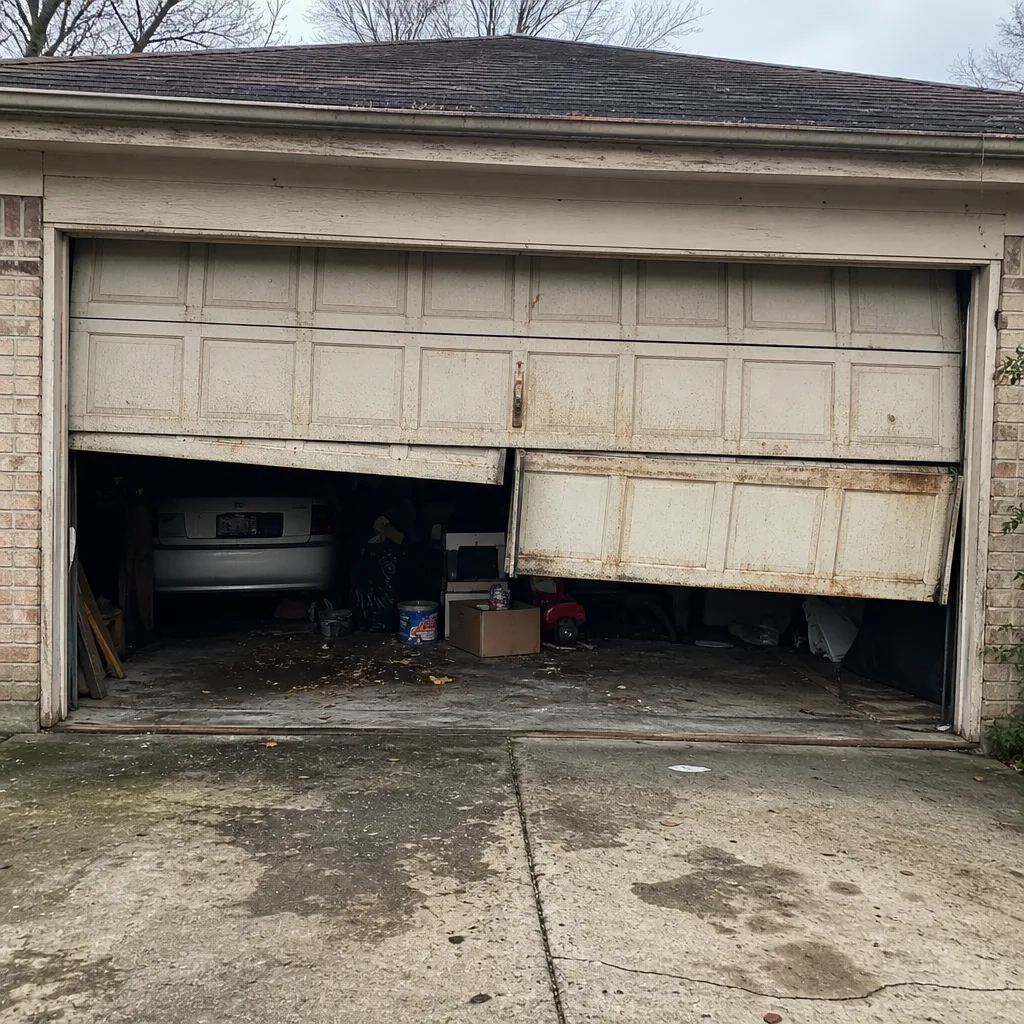 Before
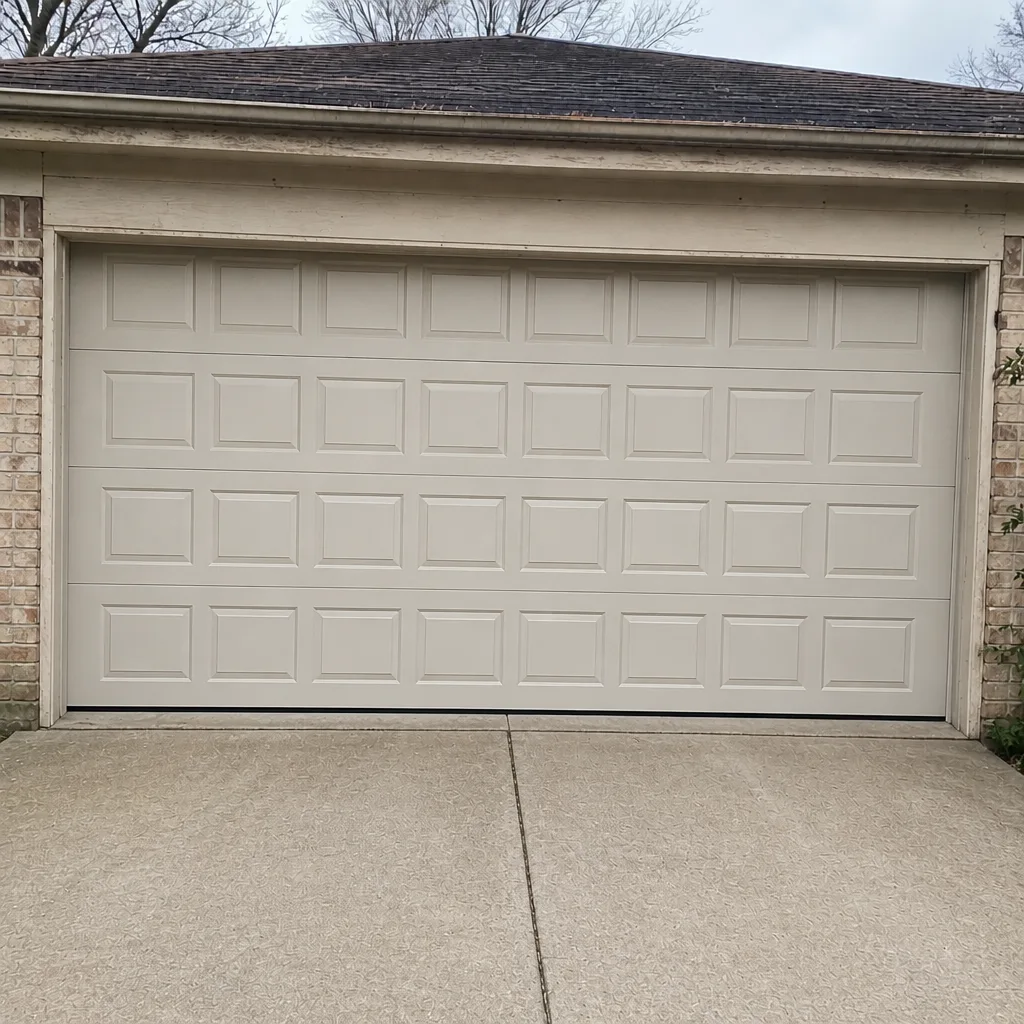 After
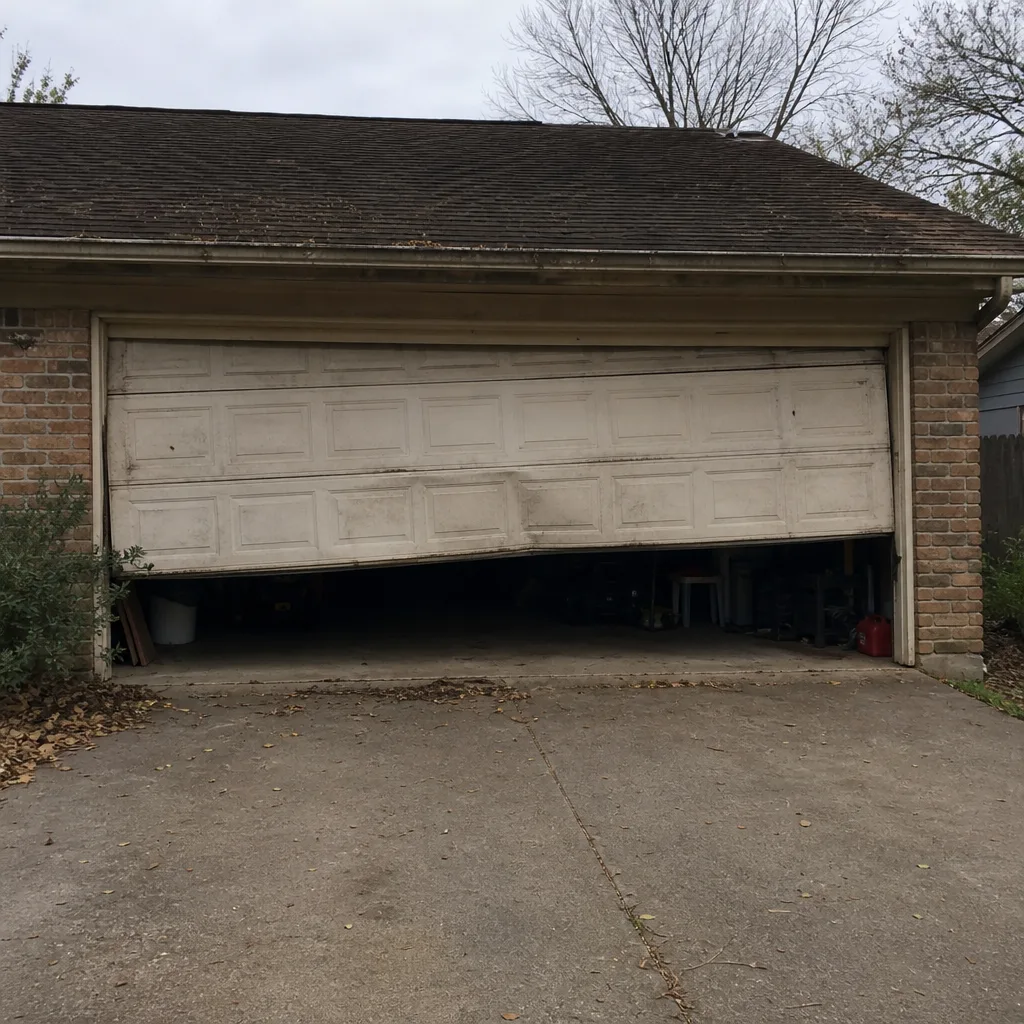 Before
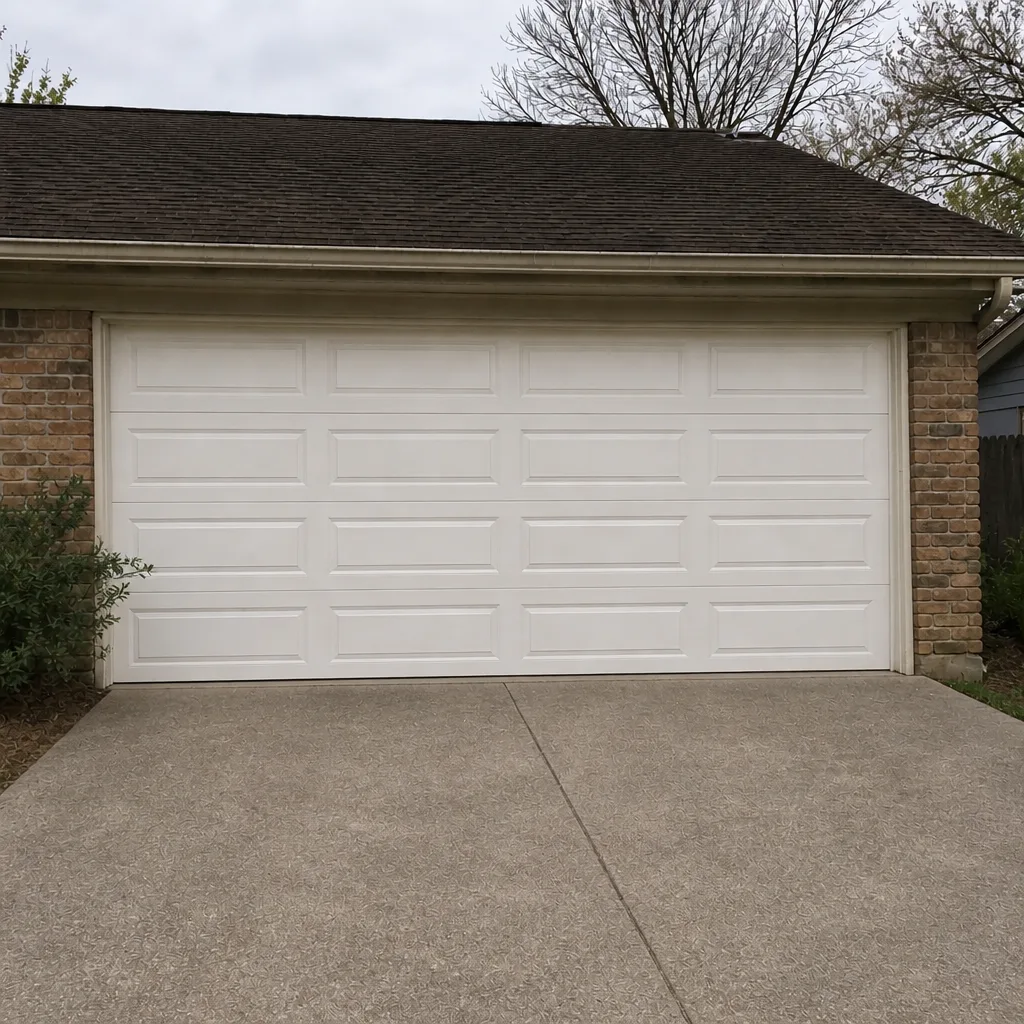 After
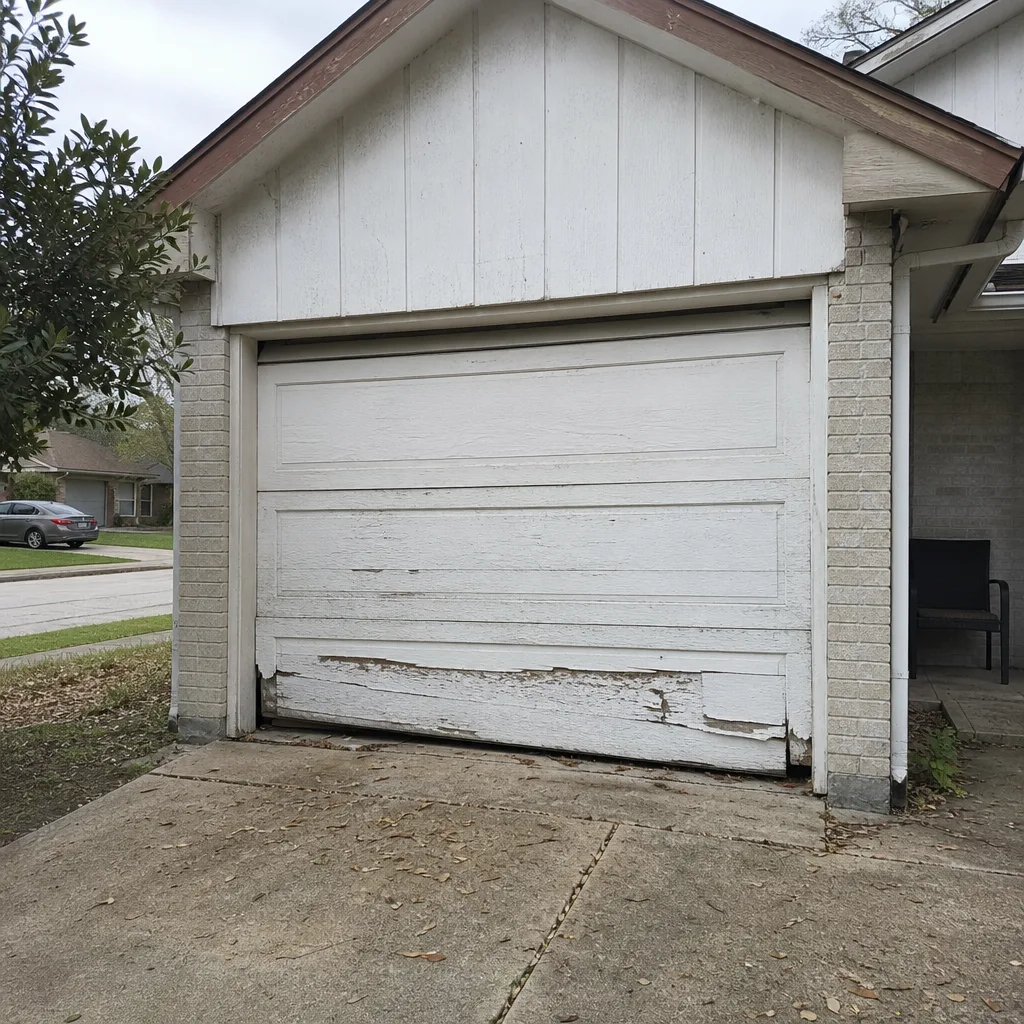 Before
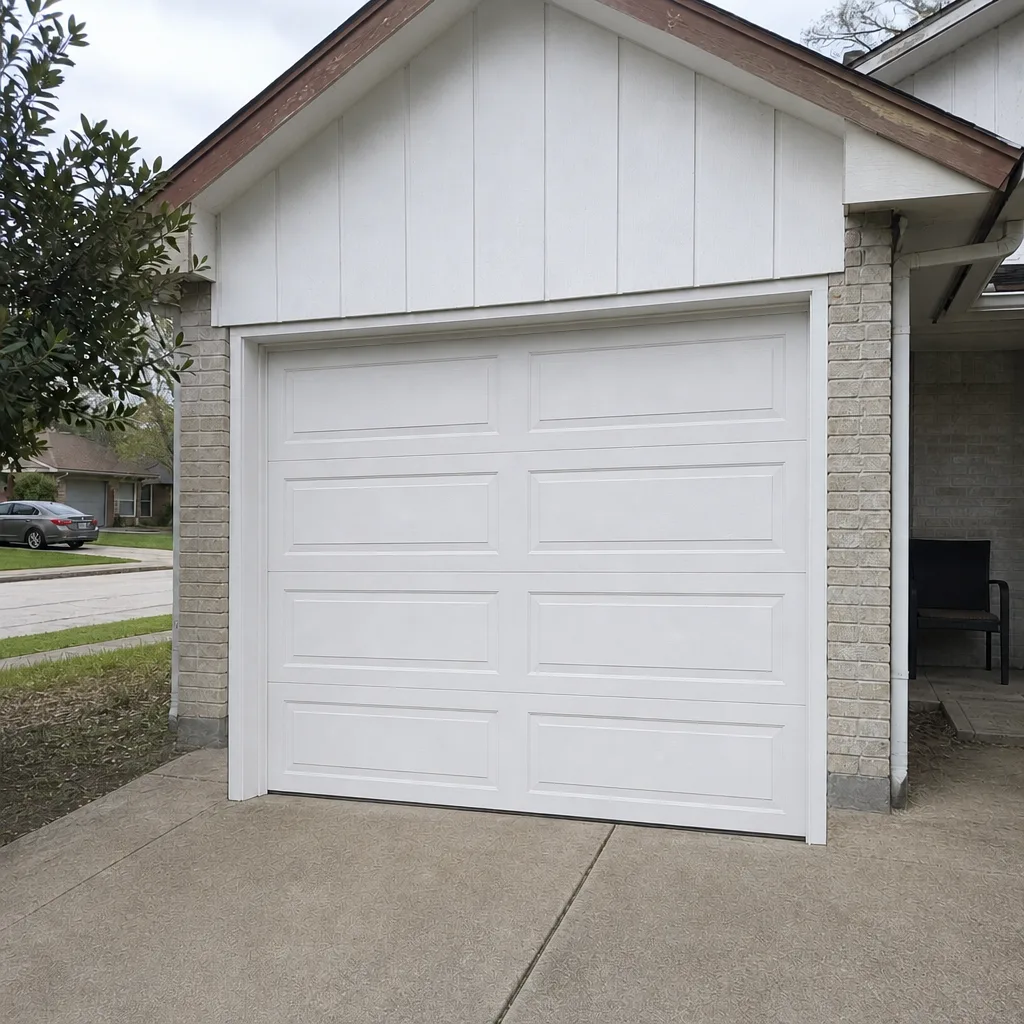 After
When to Call a Professional
Call when you hear grinding rather than rattling, when the door slows or closes crooked, when you see pitting or flaking on a spring, when a cable looks slack or frayed, or when an opener keeps repeating a code. Call immediately if the door has left its track, drops or slams, or shows visible spring separation. Anything involving a torsion spring, cable, or drum should only ever be handled by a technician; a full inspection is the safest way to know the difference. Mission Bend Garage Door Repair Pros offers free estimates in Mission Bend – call (855) 658-5076. We answer 24/7, with fast dispatch from 7am to 7pm. Our technicians have up to 10 years of experience on the eight major brands, and we work on doors and openers only.
Frequently Asked Questions
A hesitation before moving, grinding noise, slow travel speed, uneven closing, spring rust with pitting, and repeating opener blink codes are the ones that matter most. Any single sign is worth an inspection, and a combination means the door should be checked before it’s used again. Call (855) 658-5076 for a free estimate – we answer 24/7.
Yes, rattling, creaking, and a basic mechanical rattle are normal for a healthy door. Grinding is not, and neither is a sudden new noise that appears after a storm or a cold snap. If you’re unsure which camp your door is in, a free estimate settles it fast.
Look for rust with pitting or flaking, uneven coil spacing, or a door that’s suddenly much harder to open or won’t stay up. A spring that’s visibly separated or cracked is a stop-using-it situation. Never test a spring by hand. Call (855) 658-5076 for a professional look – estimates are free.
Usually no. A door that closes lower on one side is almost always a cable or spring problem, and adjusting the track only masks it. The right call is a proper inspection of the cables, springs, and drums. Call us for a free estimate and we’ll tell you which it is.
They’re error codes, and the count of blinks tells a technician what’s failing – sensor alignment, travel limits, force settings, or board trouble, depending on the brand. Resetting the opener doesn’t fix the fault; it only silences the light. Our team reads codes on LiftMaster, Chamberlain, Genie, Craftsman, and the other brands already on most doors in Mission Bend.
No – the price is set by a written estimate before any work starts. The estimate is free, and the quote you agree to is the quote you’re billed. What you’ll be told upfront is which warning sign points to which repair. Call (855) 658-5076 for a free estimate.
We answer 24/7, and crews run Sunday through Friday, 7am to 7pm. A call outside dispatch hours is booked into the next opening. When the door won’t move, that’s the number to have. Call (855) 658-5076.
The Bottom Line
Garage door failures rarely happen without warning. The signs come first: hesitation, grinding, slow travel, a crooked close, rust with pitting, and blinking codes. Read them early and the repair is usually small. Ignore them and the same door turns into a cable failure, a spring break, or a burned-out opener. In a Mission Bend climate where humidity drives spring rust and summer heat stresses panels, the small signs are worth paying attention to. Our technicians have up to 10 years of experience on every major brand. If a sign shows up, get it looked at before the next cycle. Call Mission Bend Garage Door Repair Pros at (855) 658-5076. We answer 24/7. Fast dispatch from 7am to 7pm – Sunday through Friday. Free estimates, and the price is agreed before any work starts. For an overview of everything we handle on doors and nothing else, see Mission Bend Garage Door Repair Pros.
Written by the team at Mission Bend Garage Door Repair Pros.